
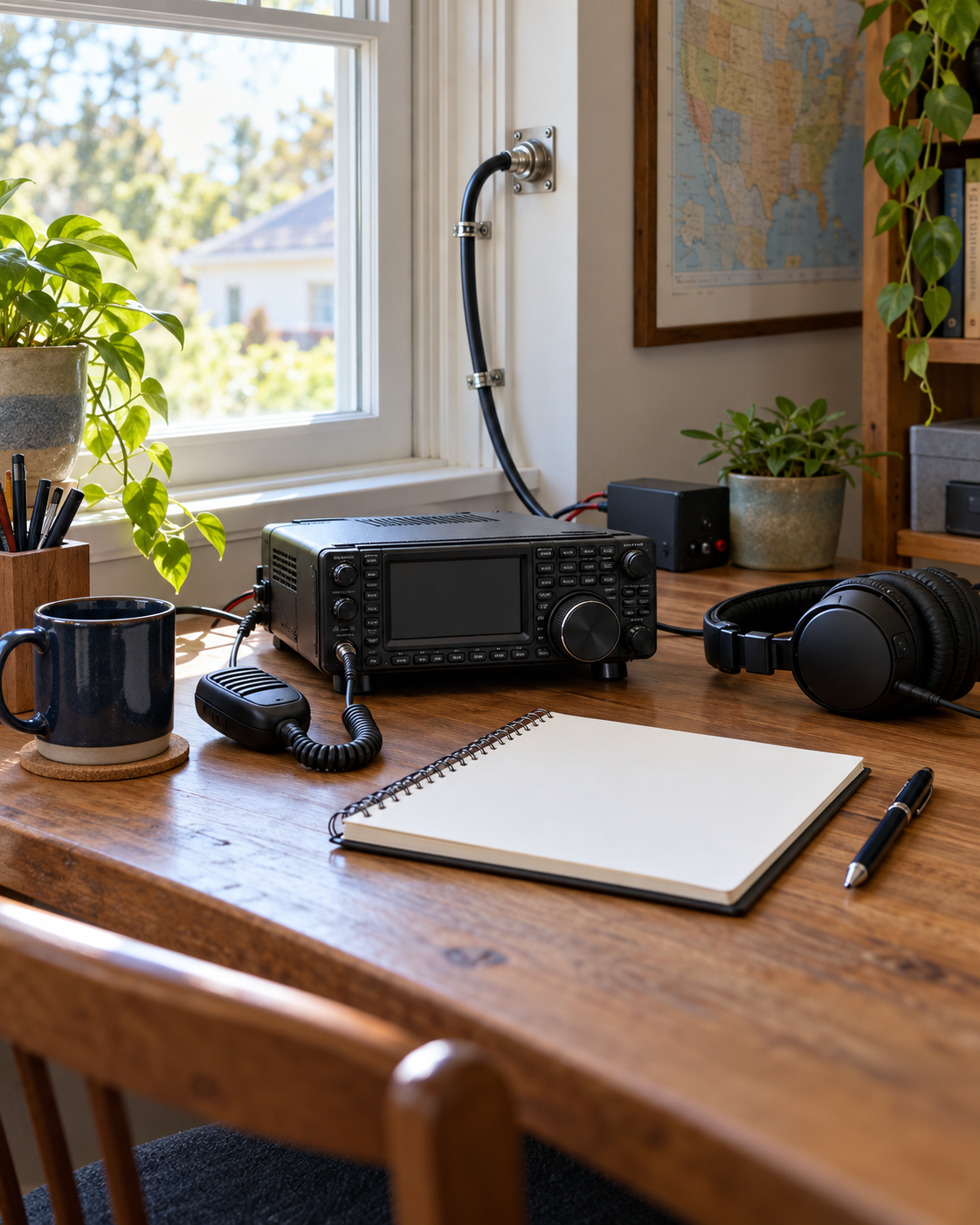
I write Call and Signal to make the first steps in US amateur radio easier to verify and safer to follow.
A useful beginner guide states the relevant US license class, current rule source, equipment assumptions, and the point where a new operator should stop and get experienced help. The site is independent and is not an FCC service or a substitute for official rules.
Editorial approach
From a rule to a first contact
Licensing comes before transmitting. Each operating guide starts with privileges and prerequisites, then moves to a modest setup, checks, on-air procedure, and a record of the contact.
Equipment specifications, club practice, and official requirements are different kinds of evidence. I label them separately and do not claim a radio or antenna was tested unless a specific test is documented.
How the guides are written
Three working principles
Check current privileges
State the US rule source and check date whenever a band, mode, or power choice depends on a license.
Explain the setup
Define unfamiliar terms and make each first-station step small enough to verify.
Stop at the safety boundary
Treat high voltage, towers, complex antenna work, and RF exposure questions as reasons to seek qualified help.
Corrections and questions
If a source, instruction, or safety boundary needs attention, email [email protected] with the page URL and the detail to review.