The Practical Difference in One Decision
Technician may be enough if your main interest is local VHF/UHF operating. It also provides limited HF access, so staying with Technician does not mean giving up HF entirely. General is the upgrade to consider if you want broader HF privileges than Technician provides. The useful question is not which license sounds more capable, but whether the operating you want to do calls for privileges you do not yet have.
Think about where you expect to spend your time. If local contacts appeal to you and Technician’s HF options cover what you want to try, an upgrade need not be your immediate priority. If a particular HF operating goal falls outside those options, General becomes a practical next step. This compares US FCC Part 97 privileges as verified in September 2026; recheck the current rules before transmitting.
What Changes When a Technician Upgrades?
The exam requirement changes in a specific way. The FCC lists Element 2 as the qualification for Technician and Elements 2 and 3 for General. If you already hold a Technician license, you need to pass the additional Element 3 exam to meet the General exam requirement; you do not need to repeat Element 2. ARRL describes Element 3 as a 35-question written exam.
The starting point matters. Someone who has not yet qualified for Technician must account for both elements required for General. An existing Technician has already met the Element 2 requirement, so the upgrade decision is about preparing for Element 3. For example, if you are studying for your first license, a General-only guide does not cover the full set of exam elements you need. If you already hold Technician, a Technician-only guide does not prepare you for the additional element. Checking the element named on a course or guide helps you avoid mistaking general amateur-radio study for preparation for the exam you actually need.
There is also a date to check when choosing materials. ARRL lists the current General question pool as valid through June 30, 2027. If you expect to take Element 3 during that period, look for materials tied to that General pool rather than relying on an undated guide. If your plans extend beyond the listed end date, check which pool will apply before choosing a course or committing substantial study time. The published validity period identifies the pool covered now; it does not tell you what questions will apply after it ends.
A useful preparation check is therefore two-part: confirm that the material covers General Element 3, then confirm that its pool dates match your planned exam date. That check applies whether you study independently or use a course. You may choose to review earlier material for your own understanding, but that is separate from the additional exam requirement for an existing Technician. The distinction keeps the upgrade manageable without implying that all General preparation is covered by a Technician guide.
Passing Element 3 is the licensing step discussed here, not a substitute for checking operating rules. The exam comparison tells you what qualification an existing Technician must add; the later comparisons of frequencies, modes and power determine what a General operator may transmit once qualified.
What Stays the Same for Local Vhf/uhf Operating?
Technician and General share authorization on specified VHF/UHF amateur bands under FCC Part 97; General is not a prerequisite for using those bands. ARRL describes Technician privileges as including access above 30 MHz. That is a broad description, not permission to transmit on every frequency above 30 MHz: the FCC specifies the authorized amateur bands. If your main interest is talking with nearby operators on a handheld, upgrading does not create a separate tier of local VHF/UHF band access.
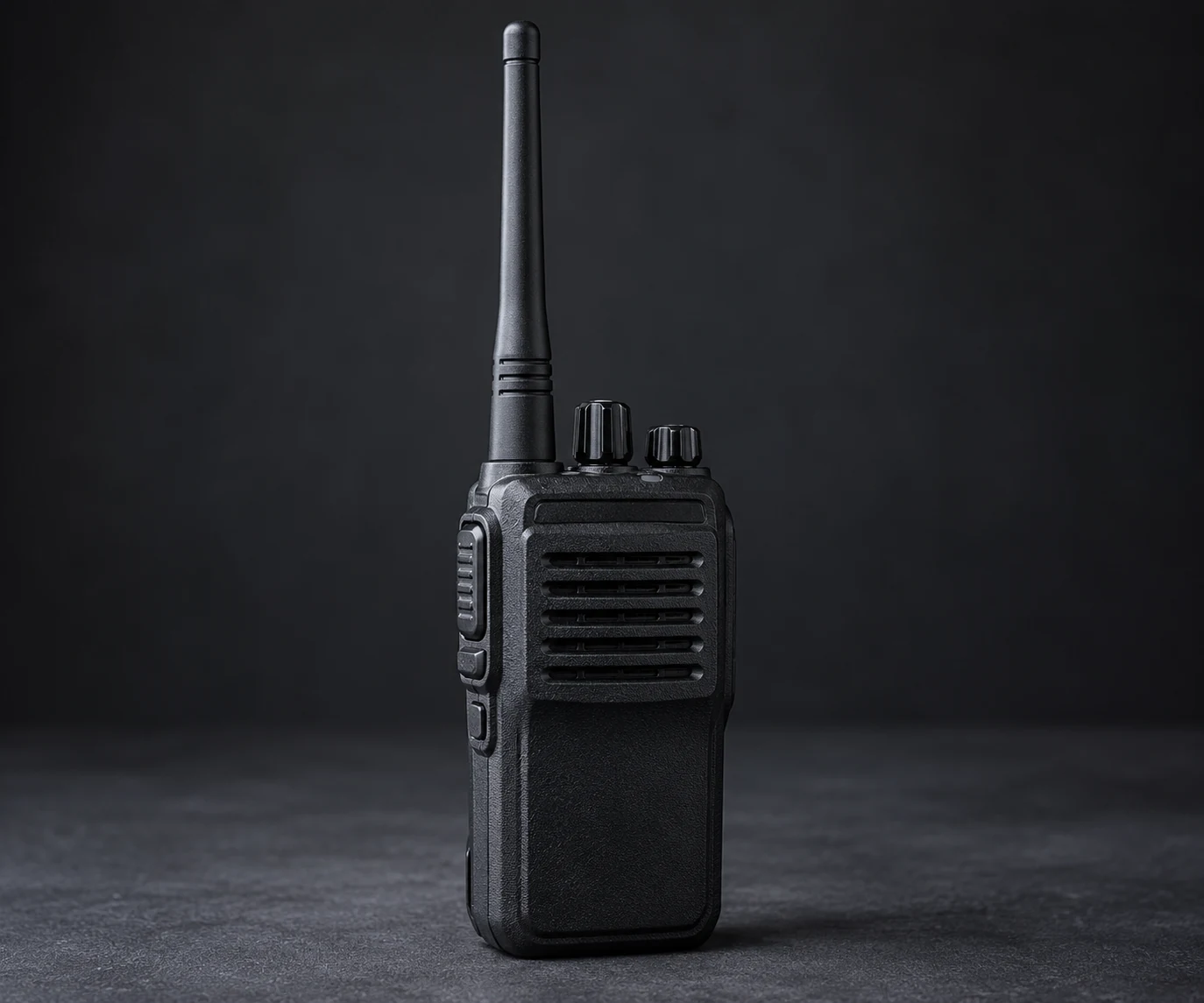
A repeater is a station that receives a transmission and retransmits it, allowing operators to communicate through that station rather than directly from one radio to another. ARRL notes that repeaters can extend a handheld’s VHF range. A direct radio-to-radio contact is often called simplex. The distinction is about the path the signal takes, not which of these two license classes permits local operation on the shared bands.
For example, two handhelds that cannot communicate directly may be able to converse through a repeater. Each station must be able to reach the repeater for that path to help; holding General instead of Technician does not, by itself, make the path work. Repeater use therefore offers a way to attempt a local contact, not a guaranteed range or contact. Conversely, when two stations can communicate directly, simplex does not require that intermediate station. If a local contact is difficult, consider the signal path and whether a reachable repeater offers an alternative before assuming the license class is the obstacle.
Consider a Technician whose usual operating is checking in with nearby amateurs through a repeater. Becoming a General does not, by itself, change the class privilege that permits that VHF/UHF activity. The same is true of a Technician interested in direct local contacts on an authorized VHF/UHF band. In either case, upgrading would need to serve an interest other than gaining the band authorization both classes already share.
You can develop your handheld, simplex, or repeater operating as a Technician without treating General as a required step for those activities. For a local-operations goal, distinguish a coverage or signal-path problem from a license-privilege limit: an upgrade addresses the latter only when the privileges you want actually differ.
Which HF Frequencies Does Each Class Authorize?
Technician already has HF privileges. Its FCC frequency entries include portions of the 80-, 40-, 15- and 10-meter bands. ARRL describes Technician CW privileges on 80, 40 and 15 meters, plus CW, voice and digital privileges on different portions of 10 meters. These are operating options, not authorization across each entire band or permission to use every mode on an authorized frequency.
The difference becomes clearer when you compare segments, rather than band names:
| Band | Technician | What General adds in these examples |
|---|---|---|
| 20 meters | No Technician entry in the FCC’s 20-meter frequency table. | A General segment at 14.225–14.350 MHz. |
| 40 meters | Limited Technician access, which ARRL describes as CW. | In the US Region 2 figures, a General segment at 7.175–7.300 MHz. |
| 10 meters | 28.0–28.5 MHz. | General authorization extends from 28.0–29.7 MHz—a wider range on a band Technician can already use. |
These examples represent three kinds of change. On 20 meters, General adds a band absent from the Technician frequency entries. On 40 meters, both classes have privileges, but their authorized portions differ. A proposed frequency of 7.200 MHz, for example, falls within the cited General segment; saying only that it is “on 40 meters” would miss the class distinction. On 10 meters, General extends access beyond Technician’s 28.5 MHz upper limit. An upgrade is therefore not simply a switch from “no HF” to “HF”: its value depends on the particular frequencies you want to use.
The 80- and 15-meter Technician entries matter to that decision too, even though the table focuses on three illustrative bands. Someone whose intended HF activity fits within Technician’s allocated CW portions on 80, 40 or 15 meters does not need to infer that a General license is required merely because the activity is on HF. Conversely, access to part of a band does not authorize moving to a different portion of that band. Look up the proposed frequency, not just its meter-band name, when comparing classes.
Frequency authorization and mode authorization are separate checks. The FCC’s emission rules list phone and image on 14.15–14.35 MHz on 20 meters, while the cited General frequency entry begins at 14.225 MHz. For that example, the two ranges overlap at 14.225–14.350 MHz; the emission listing does not grant a General operator access below the class-specific lower boundary. On 40 meters, the emission rules list phone and image at 7.125–7.300 MHz, but the cited US Region 2 General segment begins at 7.175 MHz. Its overlap is therefore 7.175–7.300 MHz, not the full phone-and-image range shown in the emission rule.
The same distinction prevents a misleading reading of Technician’s 10-meter privileges: ARRL’s description of CW, voice and digital options does not mean all three are permitted throughout 28.0–28.5 MHz. Before choosing an operating frequency, match the intended transmission to both the class-specific frequency entry and the emission rules for that part of the band. The examples above establish how those two entries intersect; they are not blanket permission for every mode within a named band.
Finally, check which FCC figures apply where you will operate. The 7.175–7.300 MHz General example uses US ITU Region 2 figures; location-dependent entries and applicable sharing restrictions can affect a planned use. Consult the current rules for your location rather than carrying a segment boundary from this example into every US operating situation.
How Do Frequency, Mode and Power Limits Work Together?
Before transmitting, check three things for the control operator—the licensed person responsible for the transmission. Is the exact frequency within that operator’s authorized segment? Is the intended emission permitted there? What power limit applies? The FCC ties emission permissions to frequencies the control operator is authorized to use. A radio’s ability to tune a frequency or select a mode does not establish permission to transmit.
Ten meters shows why the checks are separate. The FCC emission table lists 28.0–28.3 MHz for RTTY and data, and 28.3–28.5 MHz for phone and image. A proposed data transmission at 28.2 MHz and a proposed voice transmission at 28.4 MHz therefore require different emission checks, even though both are on ten meters. Moving that voice transmission to 28.2 MHz would not make its emission permissible simply because the radio can tune there. Conversely, seeing an emission listed does not establish that the operator’s license authorizes the frequency. Check both the frequency privilege and the emission listing before transmitting.
The same distinction matters if you leave the frequency unchanged but switch modes. A frequency check made for a planned data transmission is not, by itself, approval for a later phone transmission at that frequency. Nor does an emission listing for part of a band apply automatically across the whole band. Treat the proposed frequency and emission as a pair whenever you consult the rules; if either changes, check the pair again.
Power is a third, independent check. FCC § 97.313 specifies a 200 W PEP cap for four named HF segments for which Technician qualifies. That cap is a ceiling for those segments, not a target setting or an allowance for every frequency a Technician can use. Raising power cannot make an unauthorized frequency or emission lawful. Before setting a transmitter for a planned contact, identify the power rule applicable to that frequency rather than carrying over a setting from another segment.
Upgrading to General does not eliminate these checks. General has broader HF frequency privileges, but not every HF segment is authorized to General operators, and permitted emissions still vary by frequency. A General operator should not assume that a mode permitted on one authorized segment is permitted on another. Likewise, a different applicable power ceiling does not mean the operator should transmit at that ceiling: the FCC requires the minimum transmitter power needed for communication. That requirement applies alongside, not instead of, the applicable maximum.
For either class, make the checks against the proposed transmission, not just the band name: confirm the control operator’s privilege at the chosen frequency, consult the emission rule for the intended mode there, and apply both the relevant power limit and the minimum-power requirement. Repeat the affected checks if you change frequency, mode, or power before transmitting. A license class, a radio’s mode menu, and its available output are not blanket authorization.
Should You Stay with Technician or Upgrade to General?
Stay with Technician if your operating interests fit the privileges you already have. If you mainly want to use a handheld to contact local operators, upgrading is not necessary for that purpose; ARRL describes that as a common Technician activity . Technician also gives you limited HF options on 80, 40, 15 and 10 meters, including 10-meter voice and digital operation . If those options suit what you want to try, General need not be your next step simply because it is the next license class.
Pursue General if the HF activity you want calls for privileges beyond Technician’s. General is the second of the three US amateur license classes, and ARRL describes it as adding most HF privileges . The useful question is not whether “more HF” sounds appealing in the abstract, but whether you have a particular band segment and type of operation in mind that Technician does not authorize. A specific operating goal gives the upgrade a purpose; without one, you can keep using Technician privileges while you explore your interests.
Imagine two Technicians considering the same upgrade. One is satisfied making local handheld contacts and wants to explore the HF options already available under a Technician license. Staying put lets that operator do so without making another exam a prerequisite . The other has identified an HF segment outside Technician authorization that they want to use. For that operator, General’s broader privileges address a specific licensing limit . Neither choice reflects how committed someone is to amateur radio; it reflects what each person wants permission to do.
Before a planned transmission, turn that interest into a precise check: Does my license class authorize this frequency, this mode and this power level together? Check the applicable band segment and any location-dependent or sharing restrictions, rather than assuming that access to a band permits every operation on it. If the plan requires General privileges, upgrade before transmitting there. If Technician already authorizes it, the upgrade is a choice about additional options, not a requirement for that contact. Recheck the current FCC Part 97 rules before operating .
Finally, separate permission from results. Broader privileges do not guarantee suitable propagation, an answering operator or a particular equipment budget. General can remove a licensing barrier to an HF operation you have in mind; it cannot promise the contact.