Learning from Ham Radio Elmers works best when you bring one skill you want to practice, agree on what you and a mentor will do, then try the task yourself. The useful result is not simply having watched an experienced operator: it is being able to repeat and explain the task, recognize when something is wrong, and know when to stop and ask for help.
For a US operator, that plan also needs an on-air boundary. Before a station transmits, identify its control operator and confirm that the intended operation is within that operator’s license privileges. The approach below takes one newly licensed learner from a first club inquiry through a practice session, feedback, and a later independent check. “High-impact” means a clear goal, deliberate attempts, and observable completion—not a promised improvement by some measured amount.
Find a Club That Can Connect You with Help
Start with ARRL’s Find a Club directory. A club listing may show Mentor under “Services Offered,” alongside other services. Treat that as a reason to contact the club, not as confirmation that a particular mentor has an opening or teaches the skill you want. Ask what help is available now and who handles inquiries from newer operators.
A general-purpose club is a sensible first stop if you are still exploring practical operating skills. ARRL recommends starting with one and looking for classes and other kinds of help. Its mentoring guidance also suggests that clubs can include hands-on programs or open discussions in meetings. Those are possibilities to ask about, not offerings to assume every club has.
Make your inquiry specific enough for someone to route it. For example:
> I’m newly licensed and would like help preparing my radio for a locally confirmed simplex or repeater practice contact. Is there a class, hands-on session, or member who could help me learn the setup and explain what each setting does? I can describe my radio and arrange a time that works for a volunteer.
The request names a task without expecting a club to supply a contact, a schedule, or ready-made settings. If you already have locally verified operating information, say so; otherwise, ask what information you should confirm before a session. A reply offering a meeting is a chance to learn what that meeting covers, not yet a commitment to transmit.
If the first club has no relevant help, does not respond, or simply does not suit you, try another. ARRL explicitly encourages looking elsewhere when a first club is a poor fit. You might ask whether a different club offers a class or an introduction, then decide whether its format fits how you learn.
Save a specialty-club inquiry for a more defined interest. ARRL identifies specialty clubs as potential sources of mentors for subjects including DXing, contesting, and VHF/UHF or microwave operation. If your question is about one of those areas and a general club cannot help, a specialty club is a reasonable place to request a referral. Neither type of club guarantees an available instructor.
Choose a Mentor Who Fits the Task
Before arranging recurring sessions, tell a prospective mentor what you can already do and what you want to do next. “I can turn on my radio and receive signals, but I cannot yet prepare and explain the settings for a locally confirmed simplex or repeater practice contact” gives them a clearer starting point than “Teach me radio.” Receiving a signal is not, by itself, a check that you are ready for an authorized transmission.
Then ask what part of that task they can teach. Relevant operating experience matters, but it is different from being able to explain a choice and let you practice it. ARRL’s mentor guidance calls for someone willing to devote time and energy, explain topics simply, and direct a new ham toward useful resources. Turn those qualities into questions: “Could you walk me through the settings and then let me do them?” “Where should I look when I need to verify them again?” “How much time could you realistically give this task?”
Notice how the person responds when you explain something you find confusing. A useful match can break the task into steps, listen to your explanation, and correct an error without taking over every attempt. You need not expect one person to know every mode, radio, or operating setting. If they are comfortable with the chosen task but not a later, specialized goal, you can finish this task together and seek different expertise for the next one.
Set a respectful commitment on both sides before it becomes an unspoken obligation. Agree how to arrange a meeting, how much preparation each of you will do, and how to notify the other if you must miss it. ARRL advises an expected level of commitment that respects everyone involved. For the learner, preparation might mean bringing the radio and its documentation and noting what remains unclear; for the mentor, it might mean saying in advance whether they can demonstrate this particular setup. Those are proposed arrangements, not duties imposed by ARRL.
Teaching fit is also something you may need to test. If an explanation moves too quickly, ask to pause and try the step yourself. If you still cannot follow the approach after discussing it, thank the volunteer and look for a different mentor or learning setting. If instead the obstacle is subject expertise—for example, your goal has become contesting—ask an appropriate specialty club whether it can suggest someone. That is a targeted alternative, not a prediction that a referral will be available.
Agree on One Goal and a Workable Session Plan
ARRL recommends establishing goals and objectives that are realistic and attainable, and agreeing on when, where, and what activities mentoring partners will undertake. It does not prescribe the goal or meeting schedule below. Use those principles to make a plan whose finish line you can both recognize.
Author-designed example: A newly licensed US operator wants to prepare a radio for a locally confirmed, license-permitted domestic simplex or repeater practice contact and explain the settings used. Simplex means direct station-to-station communication. A repeater is a station that receives and retransmits signals. The learner and mentor will choose the applicable path using information they have verified locally; this example supplies no frequency, offset, tone, scheduled activity, or promised person to contact.
That is one goal, not two simultaneous operating assignments. If they choose simplex, the learner’s explanation should fit the direct path. If they choose repeater use, the explanation should fit the locally confirmed repeater setup. In either case, success means the learner can prepare the intended configuration, say why it is the one being used, and recognize when the available information is insufficient. A contact would provide practice if one is possible, but the plan should not depend on finding another station at a particular time.
The partners can make a short agreement in ordinary language:
- Activity: The mentor will explain and demonstrate the chosen setup task. The learner will then perform the same task, explaining their choices aloud. They will check the result against the locally verified information rather than treating the mentor’s memory as the only reference.
- Place and materials: They will meet somewhere suitable for examining the radio and, if they intend to transmit, for operating the proposed station. The learner will bring their equipment and whatever documentation they use; together they will establish which local operating information must be verified before use.
- Time: They will choose a meeting length both can accommodate and decide whether another attempt needs a separate meeting. One initial session followed by a later comparable attempt is a possible cadence, not an ARRL requirement.
- Boundary: They can explain settings and rehearse the task without transmitting. Any transmitted practice waits until they have made the control-operator and privilege check in the next section.
This agreement prevents “come watch me operate” from quietly replacing the learner’s attempt. During the demonstration, the mentor should make decisions visible: which locally verified information they are using, which choice it supports, and what would make them stop to clarify it. The learner then starts the setup again and makes those choices rather than just copying a finished display. If the mentor must intervene, they can note the exact point for a corrected attempt.
Keep the plan small enough to finish and assess. ARRL describes an instructional example covering simplex, repeaters, radio programming, and operating protocols; those are useful illustrations of practical topics, not a syllabus this pair must complete. That example also requires students to join a weekly net. It does not make weekly net participation a requirement for this learner’s goal.
Set the Control-operator Boundary Before Transmitting
These are rules for US amateur stations. Under 47 CFR § 97.7, every amateur station must have a control operator when transmitting. An amateur operator/primary station license grant appearing in the ULS consolidated licensee database is one stated qualification for being a control operator; do not treat that one provision as the entire rule.
Before the example learner or mentor transmits, they should explicitly identify who will be the control operator for the station and confirm that the proposed operation fits the privileges of that person’s license class. Under § 97.105, the control operator must ensure the station’s immediate proper operation, and the station may operate only to the extent permitted by that operator’s license-class privileges. A mentor’s presence does not replace this decision. Nor should the learner infer permission to transmit merely because the radio can be configured or can receive.
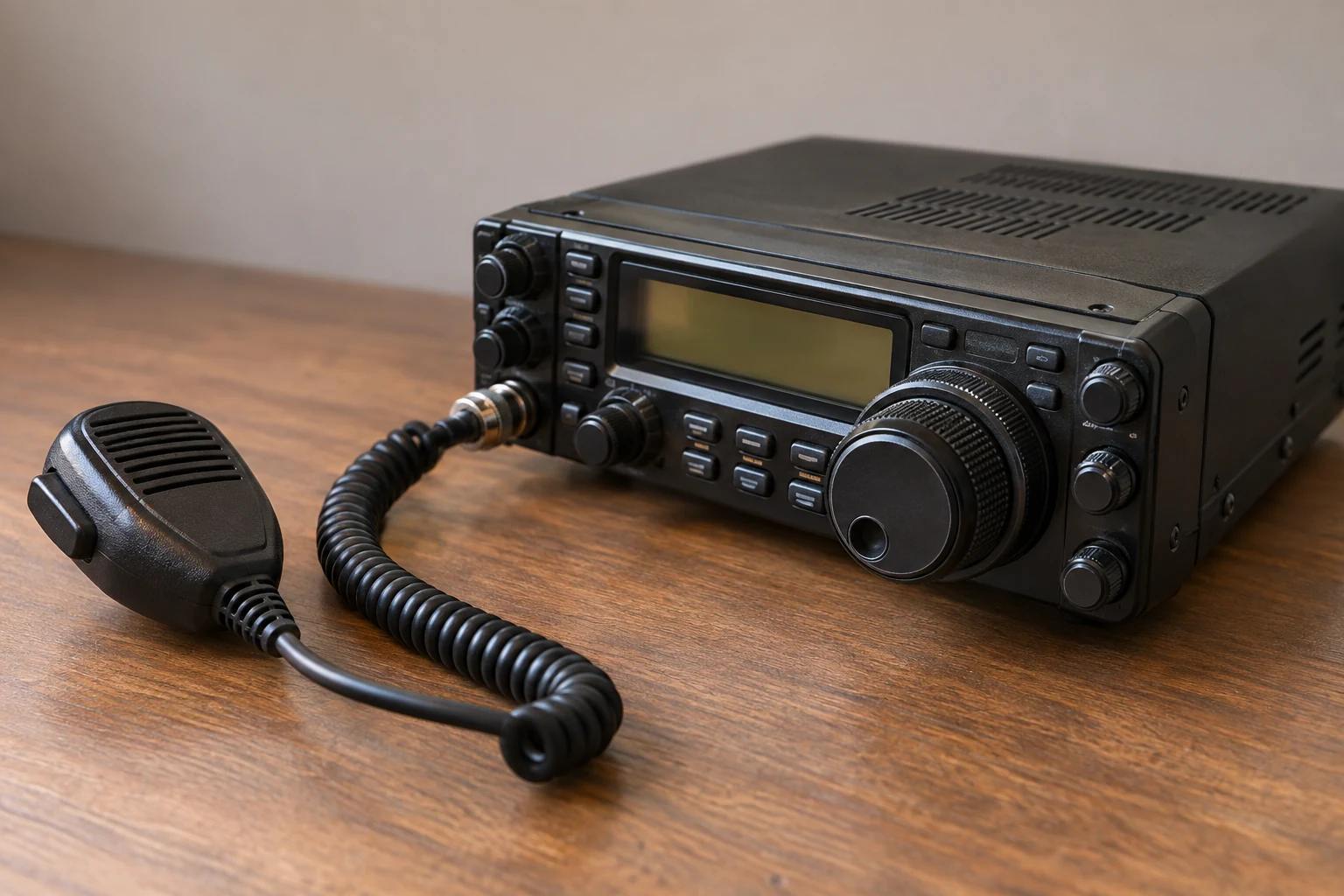
The example concerns a licensed learner. A different question arises if someone without their own license will speak over the station. Under § 97.115, a third party may participate in stating a message only with the qualified control operator present at the control point, continuously monitoring and supervising that participation. The rule also excludes specified former amateur licensees under the conditions it lists—for example, certain unrenewed, suspended, revoked, or surrendered-license circumstances—and a person subject to an effective cease-and-desist order relating to amateur service operation. It does not say that every former licensee is barred, or that a mentor can never supervise an unlicensed participant.
Keep this practice example domestic US; it makes no claim about international third-party permissions. If the partners cannot establish who controls the station or whether the proposed transmission is permitted, they should stop the transmitted part of the exercise and resolve that question first. They can still discuss and rehearse the setup without putting the station on the air.
Practice, Exchange Feedback and Test Independence
Once the control-operator and privilege check is settled, carry out the same licensed-learner goal—not a new task introduced because the mentor happens to find it interesting. The mentor demonstrates how to prepare the radio for the chosen, locally confirmed simplex or repeater practice arrangement. The learner watches for the decisions behind the setup, not just the button presses. Then the learner resets or revisits the task as appropriate and attempts it while explaining each choice. The pair check the result against the information they verified for that arrangement. No actual contact needs to occur for them to assess the setup attempt.
Make the attempt specific enough to diagnose. Can the learner say whether the selected arrangement is direct simplex communication or uses a repeater? Can they identify the intended channel or settings from the locally verified information, rather than guessing from an unfamiliar display? Can they rehearse the operating sequence they intend to use before any permitted transmission? ARRL’s example of instruction in simplex, repeaters, radio programming, and protocols shows why those are reasonable subjects for hands-on practice; it does not require this learner to cover all of them at once.
If a setting does not match what they verified, that is a useful pause point, not a reason to press ahead. The learner can show which piece of information they relied on; the mentor can help locate the mistaken choice or explain why more information is needed. If they cannot establish that the configuration and proposed transmission are appropriate, they leave the transmitted portion for another time. That keeps the attempt deliberate: the learner practices both making a choice and recognizing when not to make one.
Exchange feedback in both directions. ARRL calls for honest feedback from both people, including constructive feedback and positive reinforcement. The mentor might name one decision the learner explained correctly, then identify one adjustment: “You chose the verified arrangement correctly; now check this displayed setting against the information we brought before you proceed.” The learner can respond with the precise gap: “I understand which arrangement we chose, but I cannot yet explain why that displayed setting belongs to it.” The mentor can clarify that step, and the learner should repeat it. Another demonstration alone would not show whether the explanation worked.
For a later, comparable attempt, use this author-designed independence checkpoint:
- Can the learner prepare the radio using locally verified information and explain the settings selected?
- Can they carry out the setup without prompts, rather than recalling only where the mentor pressed buttons?
- Can they notice a mismatch between the intended arrangement and what the radio shows?
- When unsure, can they stop and ask for help instead of treating a guess as permission to transmit?
“Independent” describes the learner’s command of the task. It does not waive the requirement for a control operator whenever the station transmits, or expand anyone’s license privileges. The later attempt can be assessed through explanation and setup even when a permitted contact is not available.
If the learner meets that checkpoint, choose another bounded goal: perhaps explaining and preparing the other locally verified arrangement, if it is relevant and permitted for their next session. If one step still needs prompts, repeat that step with targeted feedback before expanding the task. If the sticking point requires expertise the current mentor lacks, ask for a referral rather than expecting them to improvise an answer. That is the practical cycle: choose one goal, agree on the attempt, observe what the learner can do, correct what remains unclear, and let the result determine the next goal.