The dated figures available here do not establish that ham radio is dying. Field Day participation rose slightly while contacts fell, and an October 2026 US license count is a snapshot rather than a trend. The answer depends on what you measure.
What the Field Day Numbers Say
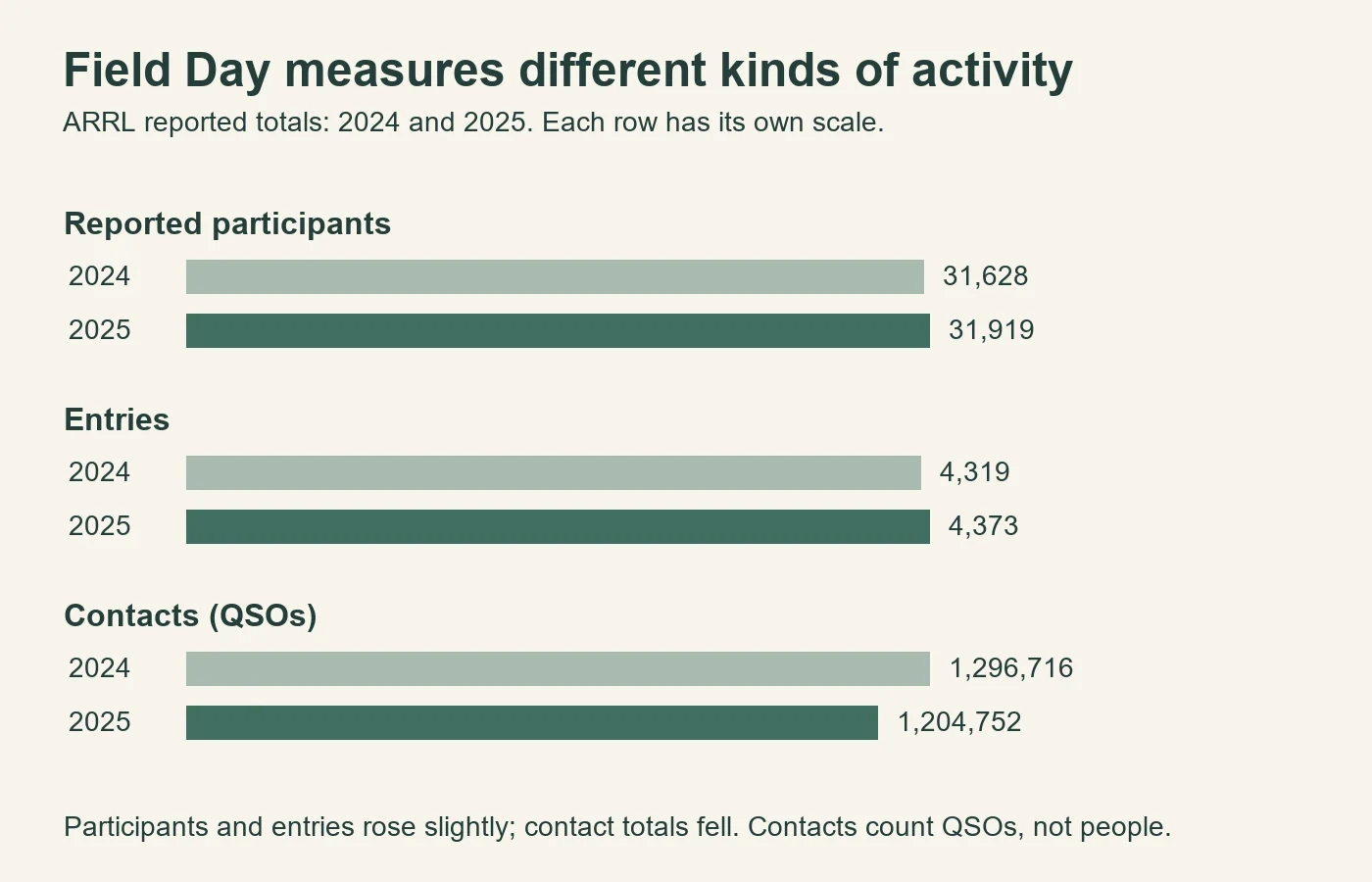
ARRL’s 2024 Field Day results and 2025 results report these totals:
| Measure | 2024 | 2025 |
|---|---|---|
| Reported participants | 31,628 | 31,919 |
| Entries | 4,319 | 4,373 |
| Contacts (QSOs) | 1,296,716 | 1,204,752 |
Participants and entries both increased a little; contacts fell. These rows answer different questions. Participants are the people reported for this event, entries are submitted event records, and QSOs count radio contacts—not additional people. A change in contacts therefore cannot, by itself, establish a change in the number of operators. The 2025 report says participants commented on poorer conditions on higher HF bands, which could have contributed to fewer contacts; it does not establish the cause.
Field Day includes US, Canadian and some overseas entries. This selected event cannot establish a worldwide trend or count unique operators across a year.
Licenses Show Availability, Not Airtime
ARRL’s FCC license count lists 729,055 active licenses held by individuals, incorporating FCC actions through October 21, 2026. That is a dated US snapshot, not a series showing whether license numbers have risen or fallen. Holding an active license also does not tell us how often someone gets on the air.
New people can still find a way in. In a January 2025 report, ARRL said 49 students of a Staten Island educator earned licenses in August 2024. It is an encouraging local example of recruitment, not evidence of a national youth trend.
What to Look for Nearby
If you are wondering whether ham radio is active where you live, the most useful questions are local: Does a nearby club hold regular meetings or operating events? Which bands and times does it use, and can a newcomer join in? The dated figures above give no substitute for those answers. They show that the hobby is still drawing reported event participants and new licensees, while leaving its broader direction unresolved.