Start with the Operating You Actually Plan to Do
A used radio is worth buying only if it suits the operating you want to do, its condition is supported by enough evidence, and the remaining cost and transaction risk are acceptable. Start with the first of those questions, not the asking price. ARRL advises choosing features around planned operating activities, and notes that an older transceiver can still have useful service life.
Describe the activity before looking at listings. Do you mainly want local voice conversations, or are you interested in trying contacts farther away? Are you drawn to voice, Morse code, or digital communication? In a listing, bands are the frequency ranges the radio covers; modes are the ways it communicates on them. Write down the bands and modes your intended activity requires. That gives you a short set of must-haves rather than a long wish list assembled from attractive advertisements. ARRL’s activity-first advice is useful precisely because a feature has value only when it serves something you plan to do.
For example, someone focused on local voice operating should not pay extra merely because a listing emphasizes modes they do not expect to use. Someone hoping to explore a particular digital mode, by contrast, should treat that capability as a requirement rather than be persuaded by a low price on a radio chosen for a different purpose. Neither buyer needs the same shortlist. A feature you might explore later can remain a bonus; it should not crowd out the capabilities needed for the operating you actually intend to start with.
If you are unsure which activity comes first, name the one you would realistically try soon and mark the others as possibilities. Then compare each candidate against the same must-have list. A radio that misses a required band or mode does not become a better fit because it offers several unrelated extras. Conversely, a simpler model may belong on the shortlist if it covers your present plans, even if another listing has a more impressive feature list.
Once you can state those needs, compare models rather than isolated bargains. ARRL recommends consulting its product reviews when considering new or used radios. A review can help you understand what a model was designed to do and whether its controls and features sound appealing for your plans. It is not a reason to assume that a particular used unit is in the condition described by its seller. Keep model suitability and the evidence about the individual radio as separate questions.
Do not discard a model simply because it is older: ARRL says older transceivers can retain useful service life. Equally, age alone is not a reason to overlook a missing must-have. The goal of shortlisting is modest: identify models whose capabilities match your intended activities, and leave condition, ownership costs, and purchase terms to determine whether any particular listing is worth pursuing.
Request Evidence, Then Inspect Within Safe Limits
Before arranging a visit or sending payment, ask the seller for clear photos of the actual radio: the front panel while powered, the rear connectors, the model label, and any visible wear or damage. Ask what they have personally checked, what equipment they used, and what they have not checked. A short demonstration can establish more than a listing that says only “powers on,” but it helps only if the seller describes what the demonstration shows.
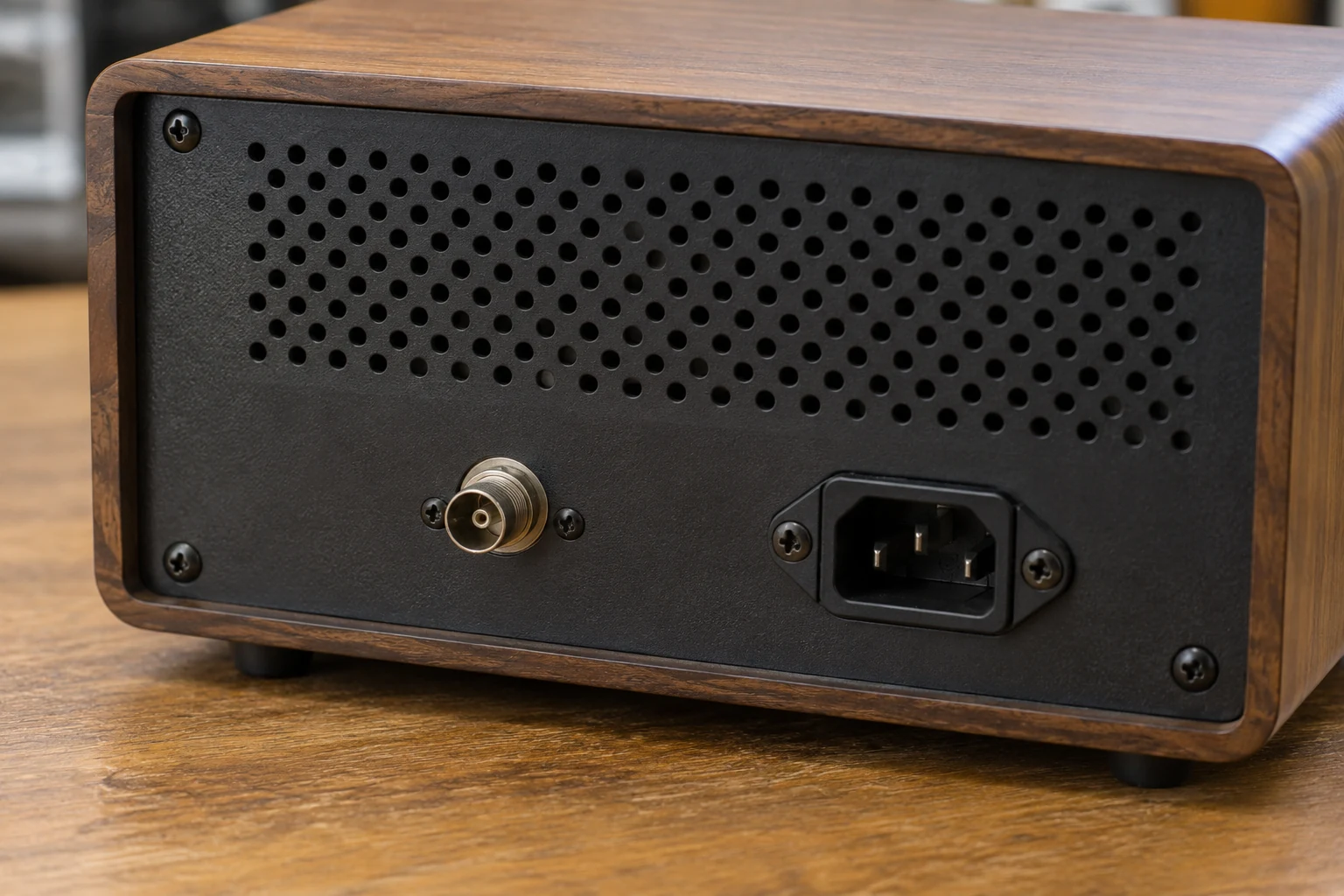
For an expensive transceiver, seek an opportunity for a meaningful test rather than relying on appearance. ARRL’s hamfest guide recommends testing an expensive transceiver before purchase and describes a quick power-up as only a limited, casual check. Its useful lesson here is the inspection principle—not its dated prices or model recommendations. A lit display may show that the radio starts; it does not certify that its receiver works across the functions you need or that its transmitter works properly. Ask the seller to distinguish “turned on,” “received a signal,” and “transmitted and measured,” rather than treating those statements as interchangeable.
At an in-person inspection, compare the radio with the listing and work from visible, low-risk checks outward. Look over the case, controls, display, connectors, and included items. Note loose controls, damage, or missing parts, then ask the seller to explain anything unexpected. If a receive demonstration is available, have the seller show how the radio tunes and produces audio, and note which functions they actually demonstrated. Hearing one signal is useful evidence for that setup; it leaves other bands, modes, and functions untested.
Do not turn a purchase inspection into an improvised on-air transmit test. No live transmission should occur without the proper license, a suitable load or antenna, and a safe setup. If the seller proposes a transmitter demonstration, ask who will operate it and what the radio will be connected to. If those conditions cannot be established, leave transmission untested rather than pressing a transmit control to see what happens. A properly arranged demonstration can reduce uncertainty, but even then, record what was measured and what remains unknown instead of calling the radio fully certified.
ARRL also advises that a buyer should be able to plug in a major item to see whether it works. If a seller cannot offer any safe opportunity to check a costly radio, ask whether they can provide another form of specific evidence or arrange a later inspection. The point is not to demand a perfect bench evaluation at every sale. It is to know whether you are paying for demonstrated functions or accepting the risk of functions no one has checked.
Price the Repair and Accessory Risk for the Specific Model
A low asking price is only useful if it leaves room for what the radio still needs. Before treating a listing as a bargain, identify what is included and price the missing pieces you would need to use it as intended. A radio offered without a required accessory may still be worth considering, but compare its ready-to-use cost, not just its sticker price, with a more complete listing. Keep a separate allowance for faults that have not been resolved: an accessory purchase is a cost you can estimate, while an unknown repair may not be.
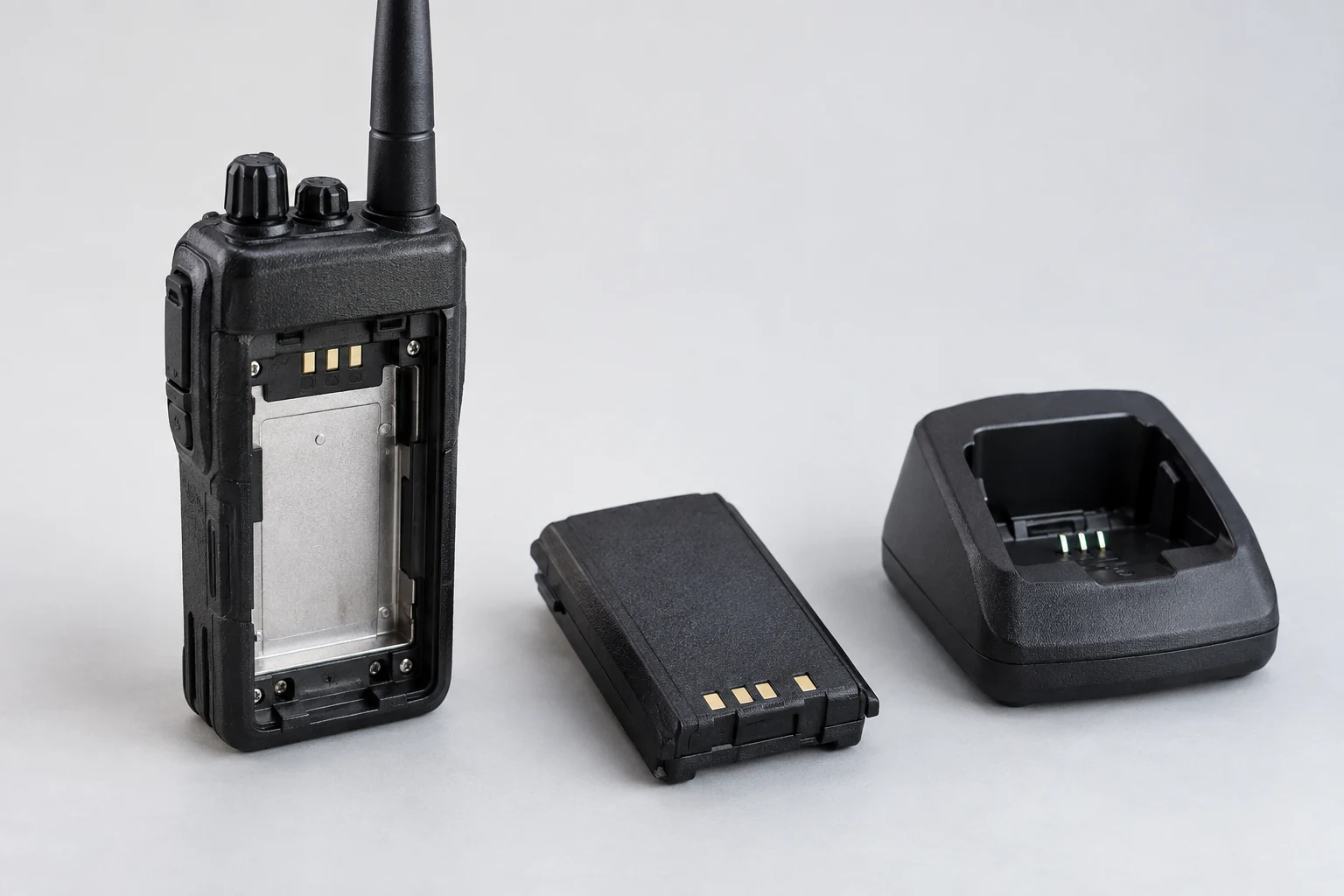
Serviceability deserves a model-specific question. Icom advises contacting its repair center first about repair eligibility and says some out-of-warranty units may not be repairable because of age or parts availability. Its unsupported-model list may also be incomplete, so finding—or not finding—a model there does not settle the question; Icom recommends a service inquiry. Those are Icom’s policies and cautions, not rules to apply to every manufacturer.
If you are considering an older Icom, give the repair center the exact model and describe the suspected fault as precisely as the evidence allows. Ask whether it is eligible for service, whether the relevant parts are available, and what costs or conditions you would need to understand before sending it in. Distinguish the answer “this model can be submitted” from “this particular fault can be repaired”: Icom says parts availability can prevent repair of some older products. If there is no diagnosed fault, say so rather than presenting a seller’s description as a repair diagnosis.
That inquiry matters most when the purchase depends on a repair working out. Imagine two listings for the same model: one includes the accessories you need and has no identified defect; the cheaper one is missing an accessory and has a reported fault. Add the replacement accessory to the second listing’s price, then consider what you would be willing to lose if the fault proves uneconomical or impossible to fix. An encouraging service response can narrow that uncertainty, but it cannot turn an undiagnosed unit into a fixed-price repair.
A seller may not be willing to hold a radio while you obtain a service answer. That creates a real tradeoff, not a reason to guess. If the listing is attractive only on the assumption that factory repair will be available, defer the purchase until that assumption has support. If a specific accessory is missing, request its part number or identify an acceptable replacement before assigning a total cost. If neither the needed accessory nor a plausible repair path can be established, a lower offer may still leave you with a radio you cannot use as planned.
Record the service answer alongside its limits: the model discussed, the fault described, and anything the repair center could not confirm without examining the unit. For a different brand, seek that maker’s current guidance or an appropriate repair provider rather than borrowing Icom’s answer. The useful comparison is not simply old versus new or cheap versus expensive; it is what each listing would cost to put into service, and how much of that cost remains unknowable before payment.
Bound the Transaction Risk Before Paying
The less you can establish about a used radio before payment, the more the transaction terms matter. ARRL advises obtaining the seller’s contact details and exploring return terms, including negotiating a return policy where possible. For a private sale, ask for a name and a reliable way to reach the seller after the exchange. If the seller offers a return, put the agreement in writing before paying. Confirm that the agreement applies to the particular radio and accessories in the listing, not just to a general description of the model.
Make the return agreement specific enough to be useful. How long do you have to report a problem? Does the period start at payment, delivery, or pickup? What happens if the radio arrives in a condition different from the listing, and who pays return shipping? A vague assurance that you can “send it back if there’s a problem” leaves room for disagreement precisely when you need an answer. If the sale is final, treat that as a real limit on how much unresolved uncertainty you can afford—not as a detail to sort out later.
Payment method is another part of that limit. Before sending money, check what buyer protections actually apply to the proposed payment and how you would raise a dispute; do not assume every way of paying offers the same recourse. Keep the listing, seller messages, payment record, and any agreed terms together. Those records make it easier to establish what was represented and what you agreed to, though they are no substitute for terms the seller never accepted. A payment dispute process and a seller’s return promise are separate protections: check both rather than assuming one supplies the other.
A dealer may be worth a higher asking price when the purchase includes useful information, service, or a defined return period; ARRL identifies those as potential advantages of buying from one. The distinction is not simply dealer versus private seller. Compare the actual offers. A private seller who answers questions clearly and agrees to workable terms may leave less transaction uncertainty than a dealer listing with thin information and restrictive returns. Conversely, a defined dealer return window may make a radio with a remaining unanswered condition question less risky to purchase.
Before paying either seller, read the applicable terms rather than relying on the label attached to the sale. A return that excludes the issue you are worried about, expires before you can reasonably assess the radio, or imposes substantial costs may offer little practical protection. For a shipped radio, clarify how a condition-on-arrival concern would be reported; for an in-person exchange, settle any promised recourse before parting ways. If an important term is unclear, ask for clarification while you still have the option not to pay. The aim is not to eliminate every unknown; it is to know which risks remain yours and whether the price and terms make taking them reasonable.
| Check | Record for this listing |
|---|---|
| Operating fit | List your required bands and modes; note whether this model supports them. |
| Condition evidence | Record what the seller demonstrated and what remains untested beyond a quick power-up. |
| Service and total cost | Note missing accessories, possible added costs, and any answer to a model-specific service inquiry. |
| Transaction terms | Record the seller's contact details and any agreed return terms. |
Make the Buy, Defer, or Pass Call
Make the decision against the operating you intend to do, not the feature that caught your eye. ARRL’s buying guidance asks readers to examine their interests, bands, and modes rather than judge a radio by features alone . A low asking price does not rescue a radio that cannot do what you need; an attractive extra is worth paying for only if it serves a use you expect to pursue.
Buy when the model fits that use and the evidence, likely total cost, and transaction terms leave you comfortable with what remains uncertain. This does not require every detail to be perfect. A missing accessory, for example, may be acceptable if you know what you need to replace and have included it in your budget. Likewise, limited demonstration may be an acceptable tradeoff for a modest purchase with terms you understand—but not because you have mentally treated an untested function as proven.
Defer when one answer could materially change the decision and you have a practical way to obtain it. You might ask for a demonstration of the function you need, clarify exactly what is included, or get a model-specific service answer before agreeing to pay. Name the question and decide what answer would make the purchase acceptable. If the seller cannot provide it, do not keep calling the uncertainty temporary.
Pass when the radio misses a must-have band or mode, when plausible added costs erase the value to you, or when important uncertainty has no reasonable boundary. An appealing price can be compensation for known limitations; it is not evidence that unknown problems will be cheap to resolve. If the seller’s terms put all of that uncertainty on you, compare the offer with one where you can make a better-informed decision—even if the asking price is higher.
The useful final question is not “Is this a good radio?” but “Is this the right radio, in this condition and on these terms, for the operating I plan to do?” That keeps a tempting listing from deciding your priorities for you.
Continue reading
Keep learning about radio