Grounding matters because a station can present three different problems: an electrical fault can make equipment dangerous to touch, an outdoor antenna raises lightning-protection questions, and some antennas need an RF return to complete their circuit. The American Radio Relay League (ARRL) treats electrical safety, lightning protection, and RF grounding as separate functions—not as three names for one piece of hardware. It also notes that not every station needs every kind of ground.
For a new U.S. ham, that distinction comes before choosing anything to install. A radio at a desk and an antenna outside may call for different kinds of advice. The useful first question is not “Where should I put a ground rod?” but “Which problem am I trying to address?” The answer determines whether the conversation belongs with an electrical professional, someone assessing the outdoor installation, or an operator familiar with the antenna’s RF behavior.
Three Different Jobs Hidden in the Word “Ground”
ARRL separates station grounding into electrical safety, lightning protection, and stray-RF suppression or RF grounding. Its key qualification is that each function has its own requirements: the best ground for one function is not necessarily the best for another.
Think of those functions as answers to different questions:
- Electrical safety: What happens if a power-supply or mains fault puts a dangerous voltage on an equipment chassis? ARRL describes safety grounding in terms of protection from that shock hazard.
- Lightning protection: How does the proposed station installation fit into a plan for a much higher-energy event? ARRL says lightning-ground requirements are more stringent than safety-ground requirements because much more energy must be safely dissipated.
- RF return or stray-RF control: Does the antenna need current flow to ground to complete its circuit, and is unwanted current being kept off the feed line? ARRL says the first need applies to some antennas, not all of them.
A simple planning example shows why the distinction matters. Suppose you have a radio, a feed line—the connection between the radio and antenna—and a proposed outdoor antenna. A concern about a fault inside the radio is an electrical-safety question. The antenna’s place in a lightning-protection plan is a different question. Whether that particular antenna needs an RF return is different again. Answering the RF question cannot, by itself, settle either safety question. That is an application of ARRL’s three-function distinction, not a finding that any particular station is safe.
This is why “add a ground” is too vague to be a useful diagnosis. It does not say which hazard or circuit behavior is under discussion, or whether the proposed addition addresses it. Conversely, ARRL’s statement that not every setup needs every kind of ground should not be read as permission to skip applicable electrical-safety or lightning-protection obligations. It means the station and the function must be identified before anyone can decide what is appropriate.
Protective Grounding and Electrical Faults
ARRL gives a specific example of what safety grounding is meant to address: a mains or high-voltage power-supply wire contacts an equipment chassis because of a fault, creating a shock hazard. The concern is the person who may touch that equipment. ARRL says requirements for this ground are set by electrical code.
That purpose differs from adding a separate rod simply because the word ground appears in a station discussion. A proposed rod is not an answer to the question of how a particular piece of equipment and the building’s electrical installation protect someone during a fault. That is an explanatory distinction drawn from ARRL’s description of the hazard and its warning that grounding functions have different requirements; it is not an assessment of any particular rod or installation.
Two beginner situations make the limit especially clear. First, ARRL warns that an old radio with an obsolete two-wire plug can be an electrical hazard if its chassis is directly connected to one side of the line cord. If you are considering such a radio, the important issue is its electrical safety, not whether an extra station ground sounds reassuring. Have appropriately qualified help assess uncertain older equipment rather than treating a grounding accessory as a substitute for that assessment.
Second, ARRL warns that installing an antenna can bring amateurs dangerously close to power lines. That is an installation hazard, distinct from a fault inside the radio. An extra rod does not answer whether a proposed antenna location or the work needed to install it puts someone near a power line. If the location raises that concern, stop planning the installation on your own and seek qualified installation advice.
For a U.S. beginner, the practical boundary is to recognize these as safety questions without designing changes to the building’s electrical system. Applicable local electrical code and a qualified professional must govern site-specific electrical work; ARRL identifies electrical code, rather than a universal ham-station recipe, as the source of safety-ground requirements. That remains true whether the antenna later turns out to need an RF return or not.
Lightning Protection Is a Station-wide Planning Question
Lightning protection addresses a different scale of problem. ARRL explicitly distinguishes it from ordinary safety grounding: substantially more energy must be safely dissipated, so satisfying the requirements of a safety ground does not establish that lightning protection has been addressed. ARRL also calls proper lightning protection an important part of designing a safe amateur station and presents it as a subject for a planned approach.
For someone proposing an outdoor antenna, the useful planning question is therefore broader than “Is the radio grounded?” The antenna, the route back toward the station, and the existing installation all need to be considered in a site-specific assessment. This is a way to frame a conversation with qualified help, not a claim that one particular arrangement of those parts is required. ARRL’s distinction between grounding functions is precisely why a solution chosen for an equipment fault should not be presumed to solve the outdoor installation’s lightning question.
Ask a qualified installer or other appropriately qualified professional: How should this proposed antenna installation be considered alongside the building’s existing electrical and any lightning-protection systems? Give them the actual site and antenna proposal to assess. Avoid treating a generic diagram, an isolated product, or a suggestion about adding a rod as a complete plan for an unfamiliar building. The need for a plan follows from the different function and greater energy ARRL describes; the details of that plan require site-specific expertise.
Grounding does not make an antenna or station immune to a lightning strike. “Protection” means addressing a hazard, not promising that a strike cannot occur or cause harm. Nor does an answer about lightning protection certify the equipment against electrical faults or tell you how its antenna circuit behaves. Keeping those conclusions separate is especially important when advice for a simple station sounds temptingly simple: a single grounding measure cannot be assumed to perform all three jobs merely because all three share the same name.
RF Return Depends on the Antenna, Not a Universal Rod
ARRL uses RF ground in a narrower antenna-circuit sense: some antennas need current flow to ground to complete that circuit. It gives a quarter-wave vertical as an example. That makes the antenna design the starting point for the RF question; it does not mean every antenna, or every vertical, calls for the same arrangement.
Contrast that example with what ARRL calls a complete antenna. It names a dipole and a ground-plane antenna as examples and says they do not need a separate RF ground as long as common-mode currents are kept off the feed line. The condition matters as much as the antenna name. “Ground-plane antenna” may sound as though it automatically requires a separate station ground, while “dipole” may sound as though its feed line needs no attention. Neither shortcut captures ARRL’s qualified statement.
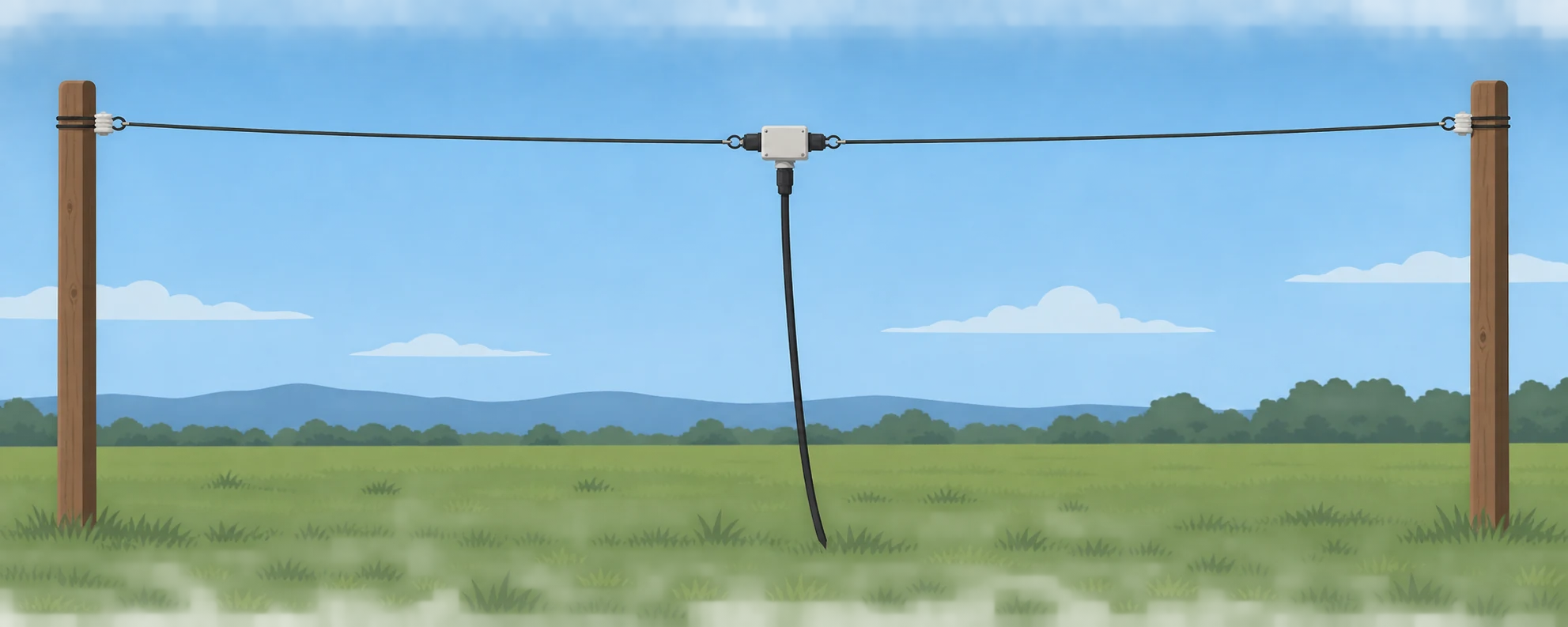
What does the feed-line condition mean for a beginner? As an explanatory way to picture it, the feed line is meant to carry RF between radio and antenna, but unwanted current can also appear along it as common-mode current. Keeping that current off the feed line is a separate part of the RF question from providing the antenna’s intended return. This description is a mental model for ARRL’s stated condition, not a diagnosis of current on any particular installation. ARRL identifies a current, or choke, balun as the commonly used way to address the feed-line common-mode condition it discusses.
Consider two proposals. For a quarter-wave vertical of the kind ARRL uses as its example, ask an antenna-knowledgeable operator what completes that antenna’s RF circuit. For a complete dipole or ground-plane antenna, ask whether the feed-line common-mode condition in ARRL’s statement is being met. In the second case, the supported conclusion is conditional: if the antenna is complete in ARRL’s sense and common-mode currents are kept off its feed line, it does not need a separate RF ground for that purpose. It is not a blanket conclusion based only on calling the antenna a dipole or a ground plane.
A current or choke balun belongs in that RF conversation, not in a universal grounding prescription. ARRL’s mention of it does not specify a device or installation for every antenna, and controlling feed-line current is not the same job as protecting someone from a chassis fault or planning for lightning. Similarly, learning that an antenna needs no separate RF return says nothing by itself about the building’s electrical-safety requirements or an outdoor installation’s lightning protection. Those questions remain open because they concern different problems.
Questions to Settle Before Installing a Station or Antenna
Bring a description of the proposed station to the right person, rather than bringing a proposed grounding solution and asking for approval. Identify the radio and any older equipment whose electrical safety is uncertain; the antenna type and its feed line; whether the antenna will be outdoors; and what you know about the building’s existing electrical and, if present, lightning-protection installations. These are facts for qualified people to consider, not instructions to inspect or change building systems yourself. ARRL’s distinctions make those details relevant to different questions.
The RF question changes with the antenna. If you plan a complete dipole or ground-plane antenna and its feed-line common-mode current is controlled, ARRL says no separate RF ground is needed for that antenna-circuit purpose. If you plan an antenna that requires current flow to ground to complete its circuit, ask an antenna-knowledgeable operator how that design’s RF return is addressed. Neither answer removes the need to consider electrical faults; if the installation is outdoors, neither settles lightning protection.
The next conversation depends on the unresolved issue. For uncertain older equipment, a suspected electrical fault, or work affecting building electrical systems, seek qualified electrical advice under applicable local code. If an antenna location brings power-line proximity into question, seek qualified installation help rather than proceeding on the assumption that grounding fixes the risk. For the proposed outdoor installation, seek a site-specific lightning-protection assessment that takes account of what is already there. For antenna performance and feed-line common-mode questions, consult someone knowledgeable about that antenna’s RF circuit.
Name the function first: fault safety, lightning protection, or RF return and common-mode control. Then seek advice matched to that function and the actual site. A satisfactory answer to one question is useful—but it is not proof that the other two have been answered.