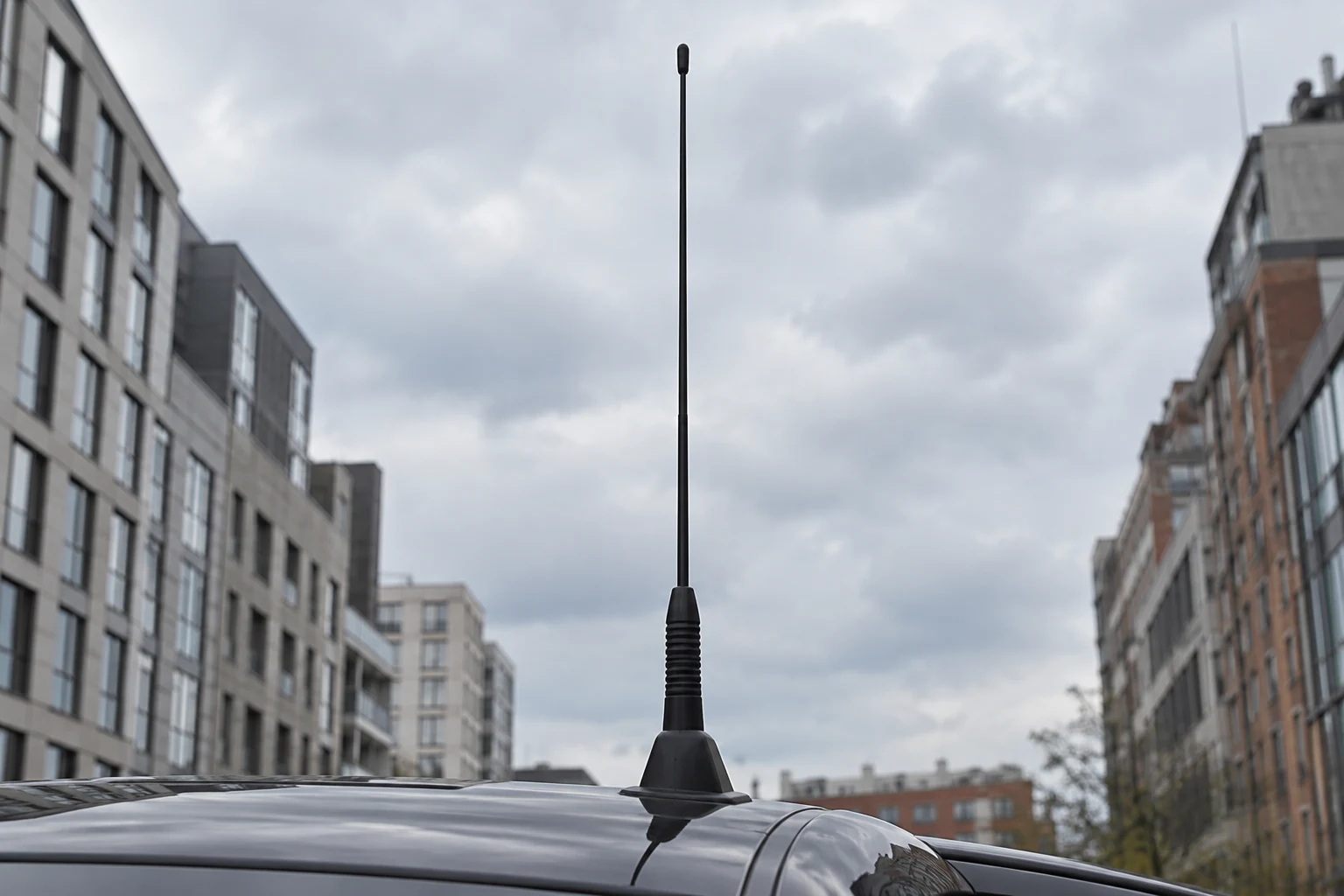
A VHF signal can reach a receiver by more than one route. A direct arrival may combine with signals scattered or reflected by objects nearby or farther along the path. Because those arrivals need not have the same phase, their combination can leave reception stronger at one position and weaker at another. Motion can keep changing that combination. This multipath mechanism can help explain fading, flutter, or distortion noticed during portable, mobile, or fixed operation—but a weak signal alone does not establish that multipath is the cause. The useful question is what changes when the receiving position or path changes, and whether a modest comparison gives you a better place to receive.
Where the Extra Signal Paths Come from
Picture a transmitter, a receiver, and a route between them. One signal may reach the receiver along a relatively direct route. Another may encounter an object and arrive by a different route. The receiver does not receive a separate, neatly labeled copy from each direction; it receives their combined result. NTIA describes scattering from stationary and mobile objects as creating multiple paths, with reflected arrivals attenuated and at differing phases. Its account comes from research on a specified 162-MHz public-safety mobile channel, not measurements that establish a particular fade for amateur 2-meter operation.
An extra route is not necessarily a bad route. In its amateur-radio study material, ARRL describes a situation in which buildings or other obstructions block the direct line of sight to a distant repeater, yet a station using a directional antenna may find a reflected route to it. That example is about gaining a usable path when the direct one is obstructed; it does not say every reflection improves reception. It does show why “direct” and “useful” are not always the same thing.
Here is an author-designed two-path sketch, not a measurement. Imagine arrival A reaching a receiver directly and arrival B reaching it after a reflection. At the receiver, the two arrivals combine:
- If their changing signal patterns broadly align, B can add to A’s received result.
- If their patterns broadly oppose one another, B can partly offset A instead.
The alignment in this sketch is what phase helps describe. A signal traveling by a different route may arrive at a different time and therefore at a different point in its changing pattern. The sketch deliberately gives no route-length difference, delay, or predicted loss: actual reception need not consist of just two arrivals. NTIA describes the received signal as an aggregate of scattered paths, each with its own attenuation and phase. “Addition” here means that the arrivals combine, not that every additional arrival makes reception stronger.
That distinction is the core mental model. A reflecting surface can provide an alternative way for a signal to arrive, as in ARRL’s repeater example. When arrivals coexist, however, the receiver must deal with their aggregate. Whether that aggregate helps or hinders at a particular position depends on the arrivals there; labeling a path “reflected” does not by itself tell you the outcome.
Why Strength Changes with Position and Motion
Return to the two-path sketch, but hold the receiver at one position. Suppose A and B partly oppose each other there. The combined result can be weaker than A alone would suggest. At another position, their relationship could be different, leaving a stronger result. This is a conceptual explanation, not a prediction that a particular move produces a particular improvement. NTIA’s description of arrivals with differing phases supports the reason for considering the combination, while its account of numerous paths is a reminder that a real receiving location may be less tidy than the sketch.
Why might a change of position matter? As a qualitative inference from that phase-based picture, moving the receiver can change its relationship to the available paths. A change in the surroundings can change the path picture too: NTIA identifies both stationary and mobile objects as sources of scattering. If the station or relevant objects are in motion, the receiver need not remain at the same combination long enough for reception to seem steady. None of this requires every path to disappear and reappear; the combined result can change even while more than one arrival remains available.
NTIA calls variation in the received radio signal’s voltage envelope fading and identifies multipath fading in its scattered-path account. In everyday operating terms, “the signal faded” describes an observation; “multipath caused it” proposes a mechanism. Keeping those statements separate matters. The mechanism explains why a position can be unfavorable despite the presence of a usable route nearby, but the account supplies no universal spacing between weak and strong positions or reliable fade depth for an amateur station.
A moving station makes the same idea easier to picture. Instead of comparing two places one after the other, imagine the receiver continually occupying new positions relative to its arriving paths. Its combined result may then change while it moves. An operator could experience an ongoing variation rather than one stable weak spot. This remains an inference from the path-and-phase model, not a promise that movement always produces audible flutter or that every change heard while moving has this cause. The point is narrower: if reception changes with geometry, multiple arrivals are one plausible explanation worth testing.
What an Operator May Hear or Observe
The underlying received variation and an operator’s description of it are related but not identical. NTIA uses fading for variation in the radio signal’s voltage envelope. An operator, by contrast, may report that a contact sounds weak or distorted. ARRL offers a specific amateur example: if someone reports that a station’s 2-meter signal was strong moments ago but has become weak or distorted, random reflections may be producing multipath distortion. ARRL presents that as a reason to try a position change, not as proof that reflections caused the report.
For voice reception, one useful distinction is between a report about strength and a report about clarity. “It became weak” describes how much signal appears to be getting through to the listener. “It became distorted” describes how the received communication sounds. ARRL’s example includes both descriptions, so neither should be treated as the one mandatory sound of multipath. A brief report from the other operator also describes an outcome, not the route each arrival took. The path explanation becomes more useful when that report can be compared with a change in position or motion.
ARRL gives a more distinctive mobile description: picket fencing is the rapid fluttering sound sometimes heard from a mobile station that is moving while transmitting. The name describes what an operator hears, not a separate propagation mechanism. The motion picture developed above offers a way to understand why changing path combinations might accompany such flutter. But ARRL says “sometimes”: a moving station need not produce that sound, and the absence of flutter does not rule out multiple arrivals. A stationary listener hearing a moving station can also distinguish the audible observation from any unverified claim about precisely which objects supplied the paths.
Data operation supplies a different observable result. ARRL says that when VHF or UHF data signals propagate over multiple paths, error rates are likely to increase. That is not the same report as “the voice sounded fluttery”: a data user may notice a problem in received data without hearing the voice symptom just described. NTIA also discusses receivers coping with propagation-induced errors in its investigated setting. Neither statement gives a numerical error-rate prediction for an amateur 2-meter receiver, nor does it establish that every data error comes from multipath.
These examples are reasons to consider a path comparison. Formerly strong 2-meter audio becoming weak or distorted, rapid flutter associated with a moving mobile station, and increased errors on a multiple-path data signal are distinct observations in the cited material. They do not form a required sequence or a universal symptom checklist. Receiver, mode, and path circumstances need not turn the same underlying combination into the same report.
Bounded Tests for Portable, Mobile and Fixed Paths
For a portable station—or a mobile station while safely stationary—start with a modest change that fits the observation. ARRL advises trying a move of a few feet when a formerly strong 2-meter signal becomes weak or distorted and random reflections may be involved. That is a bounded suggestion for that situation, not a rule that every fade has a strong spot a few feet away. It also does not require an operator to keep moving indefinitely in pursuit of a perfect position.
An author-designed comparison makes the suggestion more informative: note reception at the first position, change position modestly, and compare a comparable signal at the second. If practical, compare again at the first position rather than relying on memory of a single brief change. Ask whether the reported strength or clarity changed with the position, not merely whether reception was poor at some point. This comparison is an explanatory field test, not an ARRL-prescribed measurement method or a guarantee of improvement. Its logic follows from NTIA’s differing-phase arrivals: changing where those arrivals combine could change the aggregate. It supplies no universal movement distance beyond the specific ARRL suggestion and no way to infer a measured fade depth by ear.
A different condition calls for a different choice. If an obstruction blocks the direct route to a repeater and a suitable directional antenna is already available, ARRL’s example supports looking for a usable reflected route. A direction that yields usable reception need not be the bearing of the blocked direct path. The goal is not to prove that a particular building supplied a reflection; it is to compare the reception obtained by available directions. Nor does the example mean that turning a directional antenna will always reveal an alternative route.
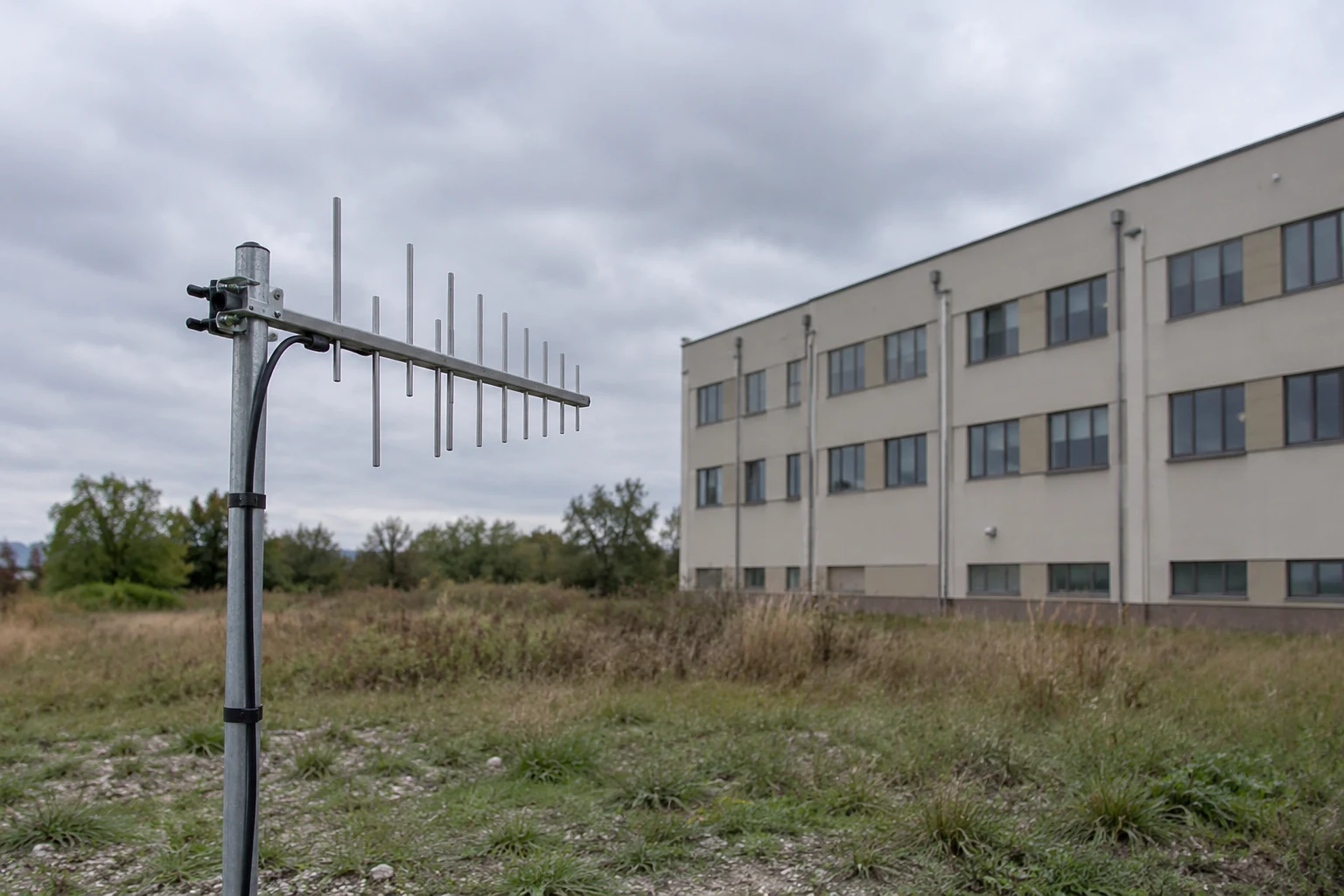
For an engineered fixed line-of-sight link, the decisions are broader than repositioning a portable receiver. The dated 2013 edition of ITU-R P.530-15 says links should, where possible, be sited to reduce significant specular and diffuse surface reflections. It also describes adjusting antenna height at one or both ends so reflections fall on rougher terrain or vegetation rather than on a more reflective surface. These are fixed-path siting ideas, not a general instruction to alter every VHF station’s antenna.
The height example deserves particular care. The same ITU recommendation says that, where towers already exist, reducing height at one end could accomplish the reflection change so long as its cited clearance rules are satisfied. Thus “raise the antenna” is not an invariable multipath remedy; the relevant choice depends on the fixed path and its clearance constraints. Nothing in this beginner explanation establishes that a particular tower height is safe or suitable. Mast and tower work is outside this reception comparison; an engineered link needs an appropriately qualified assessment rather than an experiment prompted by a weak handheld signal.
The three contexts should remain separate. ARRL’s small position shift responds to an amateur 2-meter report. Its reflected-route example concerns reaching an obstructed repeater with a directional antenna. ITU-R P.530-15 addresses siting and geometry for engineered fixed links. Each illustrates that changing the available combination can matter; none promises a certain cure in the other setting.
What a Change in Reception Can—and Cannot—Establish
A repeatable difference between positions, or a change associated with motion or path geometry, is consistent with a path-dependent reception effect. It is more informative than a single weak-signal report because the comparison asks whether reception changes when a relevant condition changes. Still, it cannot identify every arriving route or establish from that observation alone that multipath was the cause. ARRL’s formerly strong 2-meter example itself says reflections may be responsible; NTIA’s account explains how scattered arrivals can combine and fade, not how to diagnose any individual amateur contact from one report.
If reception stays poor across the positions you can reasonably compare, the result does not prove that reflections are absent. It also gives little reason to declare them the explanation. Keep basic coverage and possible interference as separate questions rather than treating “weak” as another word for “multipath.” An inconclusive comparison is just that: it does not call for a larger move, a particular antenna height, or a more elaborate claim about unseen paths.
Multiple arrivals can help by providing a usable reflected route, or hinder when their combination leaves weaker or distorted reception. A small, comparable position test can guide a portable choice; an available directional route may help with an obstructed repeater; fixed-link siting calls for its own constrained analysis. The practical result is a better-informed positioning decision, not a guaranteed cure or a diagnosis made from fading alone.