Choose your first amateur radio transceiver by deciding what contacts you want to make and where you will operate—not by starting with a model that looks appealing. Then verify that your U.S. license permits the transmissions you have in mind. Only after that should you compare handheld, mobile and home-station options, check each candidate’s documented capabilities, and account for the rest of the station.
A radio that can receive a frequency, or is capable of transmitting on it, does not give its owner permission to transmit there. Nor is the transceiver necessarily the whole purchase: its power arrangement and antenna system may need separate planning. The best first choice is therefore a radio that fits a specific, lawful use and a complete station you understand well enough to buy.
Choose an Operating Goal You Are Licensed to Pursue
Start with a sentence you could use to screen every candidate: “I want to make [kind of contact] from [place], using [bands and modes I have verified I may transmit on].” If the last bracket is still uncertain, leave it blank for now. It is a question to resolve before buying for that transmitting goal, not a reason to guess.
ARRL’s first-station guidance offers two useful starting points. Someone interested in talking with local friends on VHF or UHF can look at VHF/UHF FM transceivers. Someone who wants to explore long-distance HF contacts needs an HF transceiver. These describe different equipment aims; neither promises that a particular contact can be made from your location. ARRL also advises considering the contacts you expect and the kind of station you expect to use.
Make the place just as specific as the contact goal. Do you expect to carry the radio, use it in a vehicle, or operate mainly from home? “Local contacts while carrying a radio” is a more useful shopping target than “a versatile radio.” “Explore HF contacts from home” points to a different question: which HF use is actually available under your license, and what station would support it?
For a U.S. beginner, especially a Technician, verify transmit privileges before treating either target as settled. Check the current FCC Part 97 rules against your license class, proposed band, particular frequencies and intended emission. Record the date of your check on the comparison worksheet below. Receiving a signal is not the same as being authorized to transmit one, and a manufacturer’s coverage specification is not a statement of your privileges.
The limited 10-meter example illustrates why that distinction matters. The cited entry in §97.301(e), for a station with a Novice or Technician control operator, shows 28.0–28.5 MHz on 10 meters. That entry alone establishes neither permitted emission types nor the full allocation for your proposed use. Consult the other applicable current rules before turning it into a transmit plan; this article’s cited entry is not a dated, complete privileges check.
Your goal can remain provisional while you do that work. You might conclude that a permitted local VHF/UHF FM aim is the one to shop for now, or that an HF interest calls for further rule checking before choosing equipment. Either is a better outcome than purchasing around a transmission you have not verified.
Match the Radio’s Form to Where You Will Operate
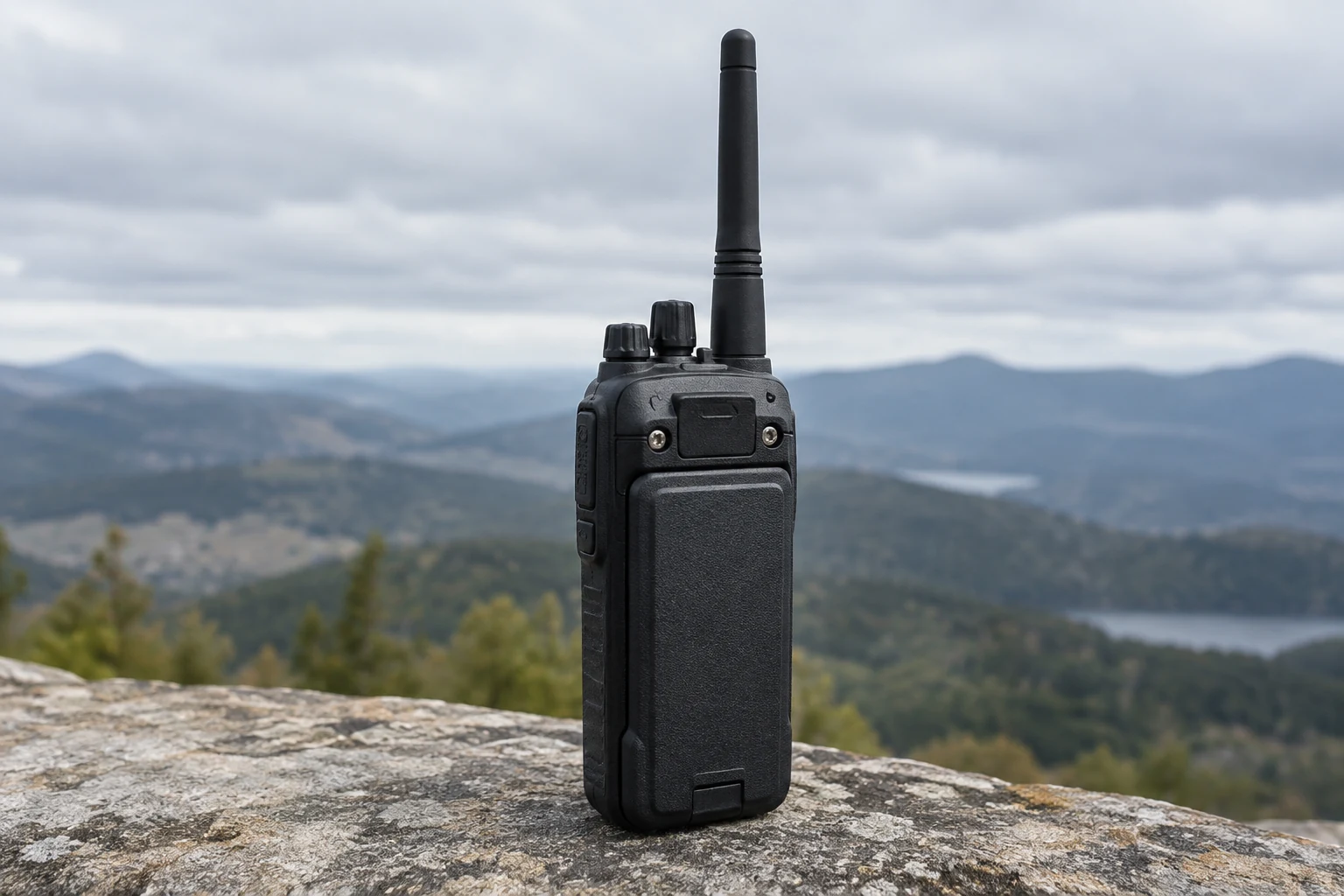
Once the operating aim is clear, choose the form that makes sense in its intended place. ARRL’s 2014 choosing-a-radio guide provides useful category descriptions, not current-model recommendations or guarantees about any radio for sale today. It describes handheld radios as intended to be carried and operated from rechargeable battery packs. It also notes that a mobile rig with a DC power supply can serve as a home VHF/UHF FM voice station, and characterizes fixed-station radios as the most capable and powerful category. Check an actual model’s specifications rather than transferring those general descriptions to it.
A handheld is the natural category to investigate when carrying the radio is central to the plan. Its battery pack belongs in that decision: ask whether the supplied power arrangement suits how and where you intend to use it. Portability alone does not settle whether a particular model covers your verified bands and modes or whether the complete arrangement meets your needs.
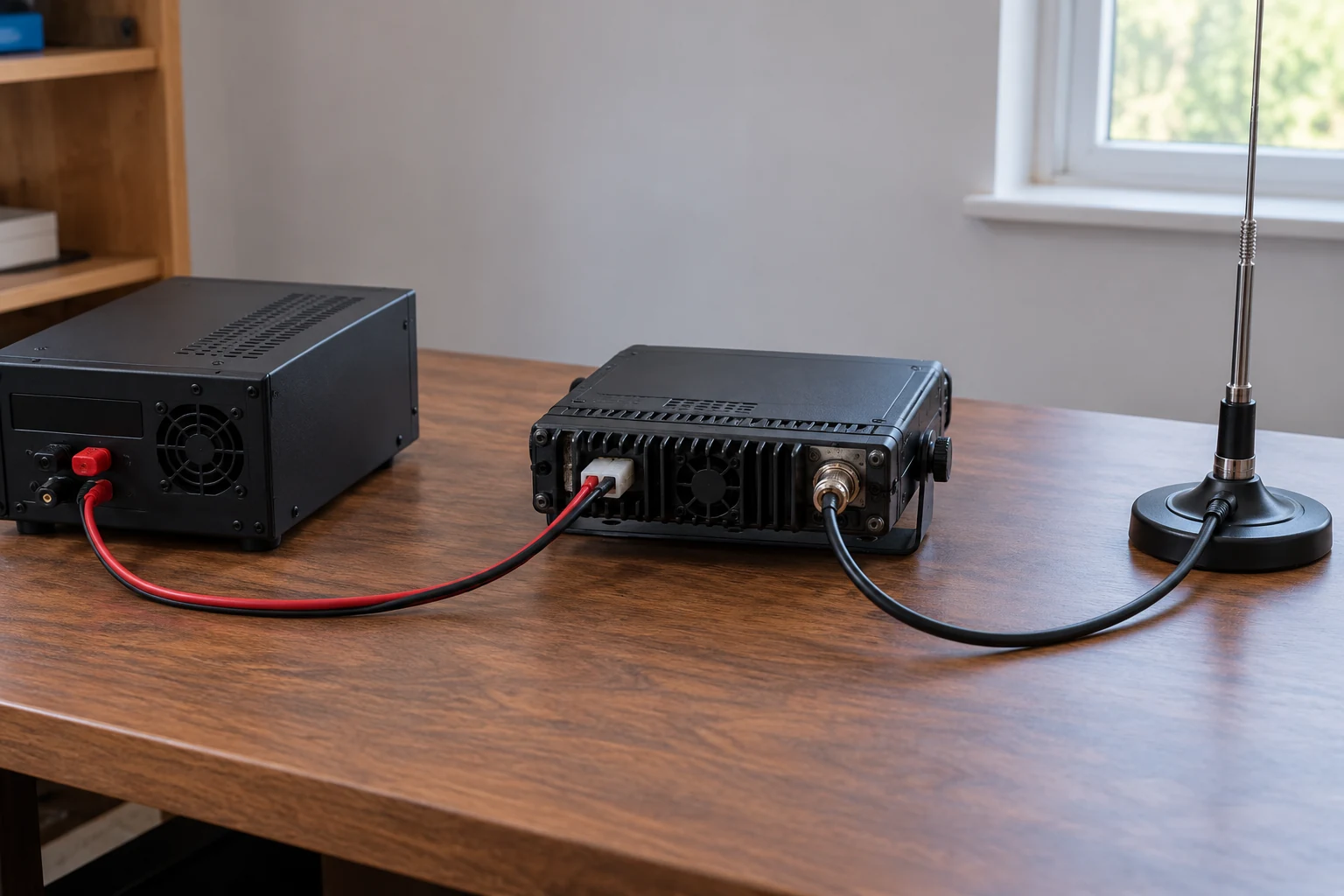
A mobile radio is worth investigating when vehicle use is central. It can also be a home-station candidate for VHF/UHF FM voice, but that changes the purchase question. At home, identify the DC power supply the particular radio requires and how the intended antenna system will connect. Do not assume the radio comes ready to serve as a complete home station merely because its category permits that use.
A fixed-station radio is a category to consider when the station will stay at home and the candidate’s documented capabilities serve your goal. ARRL’s broad description of fixed-station radios does not mean every such radio has the bands, modes or included power arrangement you need. A smaller category may fit a focused goal better than a more capable-looking radio whose extras you would not use.
Here are two author-designed beginner situations, not reports of tested equipment:
- Situation A: carrying comes first. A new amateur wants permitted local VHF/UHF FM voice contacts while carrying the radio. A handheld belongs on this person’s shortlist because carrying it is part of the intended use. A home-only station could satisfy a different goal, but not this one. The person still needs to verify transmit privileges and each candidate’s band and mode coverage, then decide whether its actual power arrangement fits the plan.
- Situation B: home use comes first. Another new amateur mainly wants permitted local VHF/UHF FM voice contacts from home. Carrying a radio is not a priority. A mobile rig used with a suitable DC supply belongs on this shortlist because ARRL identifies that combination as a home VHF/UHF FM voice option. This person should compare the documented radio, supply and antenna-system needs with other home-suitable candidates before deciding. There is no reason to presume that a handheld or a fixed-station model wins without that comparison.
The situations differ because the place and style differ, even though both people began with local VHF/UHF FM interests. If your main interest instead is exploring distant HF contacts, first look for an HF transceiver that could serve the intended station; do not treat “handheld,” “mobile” or “fixed” as a substitute for confirming HF coverage. ARRL’s statement that HF exploration requires an HF transceiver is equipment guidance, not a determination of which HF transmissions your license permits.
At this stage, a useful shortlist may contain categories rather than named models: “handhelds that document my required coverage,” for example, or “mobile candidates whose home power requirements I can meet.” Narrow it further with evidence from each manufacturer’s manual.
Check Must-have Specifications and Station Components
Give every candidate the same owner-filled worksheet. ARRL recommends separating must-haves from nice-to-haves and focusing first on frequency bands and operating style. That prevents an attractive optional feature from distracting you from an unsupported intended use.
| Fill in before comparing models | Your answer or question |
|---|---|
| Intended contacts and operating place | What do I want to do, and will I carry the radio, use a vehicle, or operate from home? |
| Verified transmit scope | Which license class, bands, frequencies and emissions have I checked in current FCC Part 97 rules? On what date? |
| Must-have model capabilities | Which specific bands and modes must the candidate document to serve that verified goal? |
| Must-have station arrangements | What power arrangement and antenna-system connections must be resolved for this place and radio? |
| Nice-to-haves | Which features would be welcome but are not necessary for the stated goal? |
| Evidence and open questions | Where does the manufacturer document each essential point? What remains unconfirmed? |
Fill the “must-have” rows with consequences of your plan, not a generic list of desirable features. For Situation A, documented coverage of the permitted intended bands and mode and a workable carrying arrangement belong ahead of unrelated extras. For Situation B, documented coverage still matters, but the home power arrangement and antenna-system questions also become central. If an HF goal is the one you have verified, HF coverage for the intended use becomes a must-have; a radio suited only to the earlier local goal cannot fill that role.
For each model, get its manufacturer brochure or manual, as ARRL advises, and find the particular radio’s stated band coverage, mode coverage and power requirements. Write down the document and the relevant specification instead of ticking a box because an advertisement calls the radio “versatile.” A manufacturer specification tells you what the manufacturer states about that model. It is not an independent test of the unit you might buy, and ARRL’s 2014 category guide is not a source for an individual current model’s specifications.
Next, plan the station, not just the transceiver. ARRL lists a transceiver, power supply and antenna system among the basic first-station components. It cautions that many larger transceivers do not have their own power supplies and tells buyers to read the specifications before purchase. Determine what a candidate includes, what your intended arrangement requires, and what you would have to obtain separately. Do not assume either that every radio needs the same separate items or that a radio with a battery pack answers every other station question.
The antenna system needs the same model-specific attention. A feed line is the cable connecting the antenna and radio. Ask what antenna arrangement your operating place calls for, whether a feed line is needed for that arrangement, and what the chosen radio’s documentation says about the relevant connections and compatibility. If you cannot establish that the intended components are compatible, mark the point unresolved must-have. Do not promote it to “probably fine” to keep a favorite candidate on the list.
This is a purchase-planning check, not an antenna installation or electrical-work procedure. If the power or antenna arrangement raises questions you cannot answer confidently from the documentation, seek help from an experienced amateur or an appropriate professional before proceeding. A clear list of unresolved questions is useful: it tells you exactly what to ask, and prevents an incomplete station from being mistaken for a ready-to-use one.
Price the Complete Station and Inspect a Finalist
With the must-haves documented, make a second owner-filled worksheet for the whole intended station. Use actual quotes or listings for items you have confirmed are appropriate; there is no useful generic price for an unnamed configuration. Keep an unknown visible rather than presenting a partial sum as the cost of getting on the air.
| Cost line | Needed for my intended station? | Included, quoted, or unknown? |
|---|---|---|
| Candidate transceiver | Yes, if it passes the must-have checks | ______ |
| Appropriate power arrangement | Check the model and intended place | ______ |
| Antenna system | Identify the compatible intended arrangement | ______ |
| Feed line, if the arrangement requires it | Confirm the need and compatibility | ______ |
| Other items required by the manual and intended use | List each one, or write “none identified” | ______ |
| Complete-station total | Add confirmed required costs only when all are known | ______ / incomplete |
An item supplied with the candidate should be marked included, not purchased twice. If the manual establishes a required separate item but you do not yet know which compatible one to get or what it costs, enter unknown and label the total incomplete. This worksheet makes two very different propositions visible: “the radio fits my budget” and “the complete station I intend to use has a known cost.” Only the second can support a complete-station purchase decision.
Illustrative decision, not a product comparison: Suppose you have verified a particular intended band and mode. Candidate One offers appealing optional features, but its manufacturer documentation does not verify the required band or mode. Eliminate it for this goal; the extras cannot replace the must-have. Candidate Two documents the required coverage, but your intended home arrangement needs a separate accessory whose compatible specification and cost you have not established. Keep Candidate Two provisional, not approved. Obtain the relevant manufacturer information and a quote, then update the station worksheet. If the compatible arrangement cannot be established, it too fails the current plan. This decision requires no invented prices and no claim that either imaginary candidate has been tested.
For a real finalist, read its manufacturer manual beyond the headline feature list. Confirm the precise must-haves, included items and power requirements you have recorded. Then look for an applicable review in the ARRL QST Product Review Archive; ARRL recommends consulting that archive when buying a radio. A published specification and a review finding are different kinds of evidence, and neither should be presented as something tested for this article. Check that a review applies to the actual model under consideration rather than assuming a similar name means the same equipment.
If the operating style itself remains uncertain, ask a local amateur radio club whether a member can demonstrate or lend an appropriate radio. ARRL notes that members may be willing to do so before a buying decision. A demonstration can help you decide whether carrying a handheld or using a home station feels suitable; it does not by itself verify every specification or settle whether a particular sale unit is sound.
If you are buying used, add a separate assessment. ARRL recommends teaming up with an experienced amateur or a reputable dealer to evaluate used equipment. Ask for that help before treating a low asking price, an appealing description or a brief demonstration as proof that the unit has no defects. Keep the same manual-based must-have and complete-station checks you would use for a new purchase; used status does not make missing coverage or an unknown power arrangement less important. This is an inspection decision, not an invitation to repair or modify the radio yourself.
Buy when the transmissions you intend have been verified as permitted, the form suits where you will operate, the particular model documents every must-have, and you understand the complete station’s needs and cost. A finalist with unanswered essential compatibility or used-condition questions can wait. The right first transceiver is the one that passes those checks for your stated goal, not the one with the longest list of possible uses.