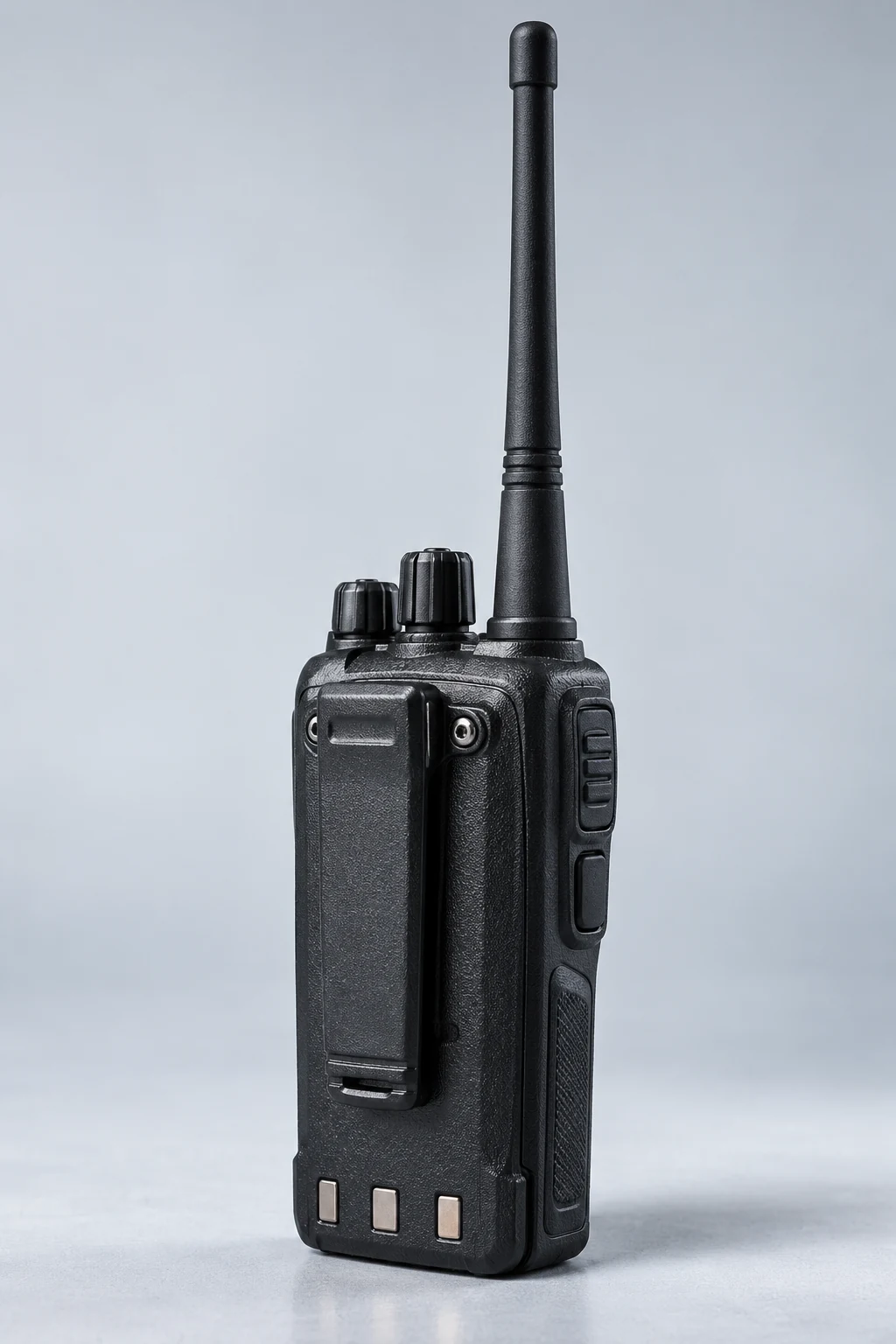
To operate simplex, two amateur stations take turns transmitting and receiving directly on the same frequency, without a repeater between them. For a new U.S. operator using VHF or UHF FM equipment, the practical sequence is to choose a frequency you are authorized to use, confirm that your radio transmits and receives on that frequency, listen, and make a short call. If nobody answers, check the setup and consider both the signal path and whether anyone is listening. A simplex call does not come with a guaranteed reply or distance.
Set the Radio for a Direct Contact
A repeater contact and a simplex contact use different signal paths. With a repeater, your radio transmits toward the repeater and receives what the repeater sends back. Those are typically separate frequencies: the frequency your radio sends on is transmit, or TX; the one it listens on is receive, or RX. A repeater offset is the difference between the repeater input and output frequencies. On simplex, the other operator receives your transmission directly, then transmits back on that same frequency. There is no repeater in the middle to relay either side of the conversation.
That makes the radio’s actual TX and RX settings an important pre-call check. Use your radio’s manual to find how it displays or stores them for the channel you intend to use. Confirm that TX and RX match on that simplex channel. Do not assume that entering or selecting a frequency has removed an offset left over from a repeater setting. If the radio is still set to transmit on a different frequency, you may hear activity on the displayed channel while sending your reply somewhere else. The goal is matching frequencies, not any particular button sequence; menus vary by radio.
FM is the mode assumed throughout this guide. Before a call, confirm that the intended channel is set up for the FM operation you plan to use. If you cannot tell what frequency the radio will transmit on, pause and consult its manual or ask an experienced licensed operator to help you verify the setting rather than testing it with an uncertain transmission.
Receiving is not the same as being authorized to transmit. A radio may let you hear a signal on a frequency where your license, the applicable rules, or the intended emission do not permit your transmission. Matching TX and RX is therefore only the equipment check. The next decision is whether that frequency is lawful and locally appropriate for your call.
Choose a Lawful Channel That Works Locally
For a U.S. amateur station, start with FCC Part 97—not a channel label in the radio or a voluntary band plan. Check the current rules for your license privileges, the applicable ITU region, and whether the intended FM emission is permitted on the frequency you propose to use. Record the date when you make that legal check so you know which version of the rules informed your choice. No current-rule verification date is asserted here. A band-plan recommendation helps you choose among possibilities; it does not itself authorize transmission.
For a specific allocation example, 47 CFR § 97.301 lists 144–148 MHz for the 2-meter band in ITU Region 2 for stations whose control operator holds one of the license credentials named there, including Technician, General, Advanced, and Amateur Extra. That allocation is a starting point for checking privileges. It does not, by itself, establish that FM is permitted on every frequency in that span. Nor does the 2-meter entry establish anyone’s 70-centimeter privileges. Make the applicable legal checks for the band and frequency you will actually use.
After that, consult the ARRL band plan and any relevant local band plan to find an appropriate place for an FM simplex contact. ARRL lists 146.52 MHz as the 2-meter national simplex calling frequency and 446.00 MHz as the 70-centimeter national simplex frequency. These are possible calling examples after you have checked authorization—not promises that either frequency is clear, usable for your station in every circumstance, or the best place to reach someone locally. Listen before transmitting.
Local guidance matters because a frequency’s use can differ by area. ARRL notes that 146.40 MHz is a repeater input in some areas. Its 70-centimeter plan also describes 445–447 MHz as locally shared among auxiliary and control links, repeaters, and simplex. Neither observation is a nationwide list of channels you may use. Instead, each is a reason to check local arrangements before treating a frequency that looks plausible on paper as a suitable simplex choice.
A calling frequency is a place to seek a contact, not necessarily the place to hold the whole conversation. ARRL advises moving an established contact to another agreed-upon frequency. Before proposing one, check that it is authorized for the intended operation and locally appropriate, then listen to see whether it appears clear. Have the other operator agree to the move rather than assuming they will follow. If a proposed frequency fails a legal or local check, choose another; do not transmit there. If it sounds occupied, likewise find another suitable choice rather than moving a conversation onto someone else’s activity.
Call, Answer, and Move the Conversation
With your channel checked and the radio’s TX and RX frequencies confirmed to match, listen before you transmit. Give the channel a chance to reveal an ongoing conversation rather than treating silence at the instant you tune in as proof that it is available. If you hear activity, wait or choose another suitable channel. If it appears clear, make a brief call using your assigned call sign. ARRL recommends a simple statement that you are listening and standing by; it also says a traditional “CQ” call can be used on FM simplex. You do not need an elaborate announcement to invite a reply.
A plain call might be: “This is [YOUR ASSIGNED CALL SIGN], listening on simplex and standing by.” Release the transmit control and pause to listen. If someone answers, acknowledge them and let each station speak in turn. As ordinary first-contact details, you can exchange names, locations, and signal reports—information about how each of you is receiving the other. ARRL suggests those basics for a contact; they are conversational choices, not an additional identification rule. A short reply such as “I’m Sam in town, and I’m hearing you clearly” is enough to start.
Here is one author-designed illustration, not a transcript or a set of real call signs. The bracketed labels are fictional placeholders: replace them with your assigned call sign and the other station’s actual call sign when speaking.
> Station A: “This is [FICTIONAL CALLSIGN A], listening on simplex and standing by.”
>
> Station B: “[FICTIONAL CALLSIGN A], this is [FICTIONAL CALLSIGN B]. I can hear you.”
>
> Station A: “[FICTIONAL CALLSIGN B], thanks for the call. I’m Sam in the north part of town, and you sound clear. Could we continue on [ANOTHER AUTHORIZED, LOCALLY APPROPRIATE FREQUENCY] if it’s clear?”
>
> Station B: “I’m Lee across town. That frequency passes my checks. I’ll listen there first; if it’s clear, please call me there.”
>
> Station A, after moving and listening: “[FICTIONAL CALLSIGN B], this is [FICTIONAL CALLSIGN A]. Are you receiving me here?”
>
> Station B: “Yes, I’m receiving you here. [FICTIONAL CALLSIGN B].”
>
> Station A, when finished: “Thanks for the contact. [FICTIONAL CALLSIGN A].”
The example’s move depends on both operators checking the destination and finding it clear; the placeholder is deliberately not a frequency recommendation. If the two stations cannot hear each other after moving, they should not assume the contact is continuing successfully there. They can stop and reassess their settings and channel choice before another attempt. A brief exchange of names and reports can be enough for a first contact—there is no need to keep transmitting solely to fill time.
Keep the legal identification requirement separate from that sample conversation. Under 47 CFR § 97.119, an ordinary amateur station must transmit its assigned call sign on its transmitting channel at the end of each communication and at least every ten minutes during a communication. The cited rule expressly excepts space stations and telecommand stations from that wording; those exceptions are not the ordinary direct contact described here. Use your real assigned call sign, not the fictional labels in the illustration, and identify when you close.
If your initial call gets no reply, you have made an unanswered call, not a completed contact. Pause and listen rather than speaking as though another station has joined you. The next useful action is to investigate why no reply came—not to assume that the call, the channel, or the radio must have failed.
Improve the Direct Path Without Assuming a Range
Without a repeater, you also lose the benefit of a repeater site’s favorable position. ARRL notes the importance of a repeater’s radio horizon and advises simplex operators to operate from a high spot. The practical distinction is that a direct contact depends on the path between the two operators’ stations; it is not being relayed through a well-placed site. That makes your operating location worth considering when a call from your current position does not work.
If you can reach an accessible higher location through ordinary, safe travel, trying from there is a reasonable next attempt. It is a conditional operating choice, not an instruction to climb, install an antenna, or work at height. A higher position may improve the path, but it cannot supply a fixed distance promise: the other station’s location and conditions still matter. ARRL’s high-spot advice is useful precisely as a way to improve your chances, not as a range chart.
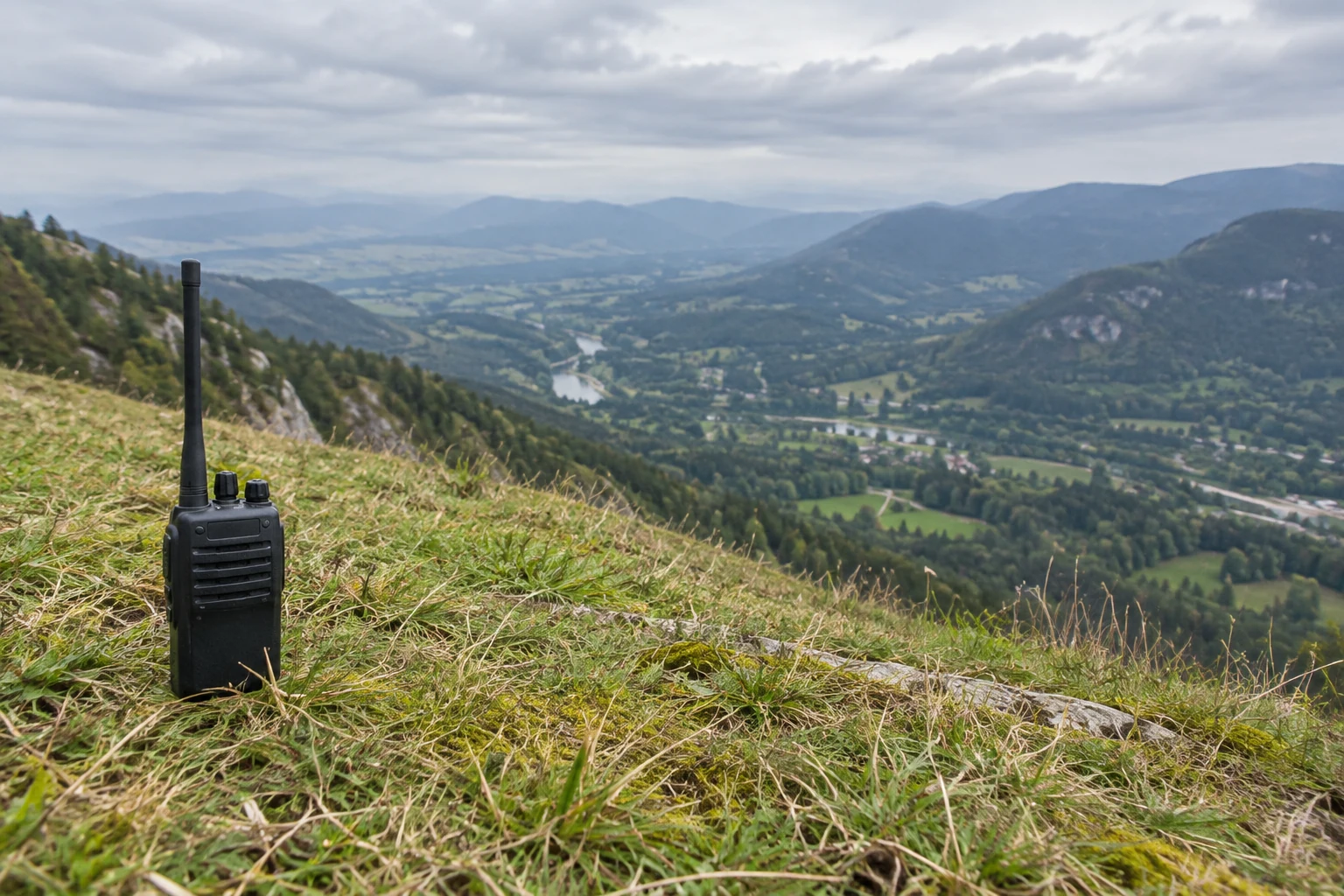
ARRL makes a separate point about antennas: a better antenna can improve both transmission and reception. If you already have a suitable alternative you know how to use safely, it may be worth comparing results. This is not a requirement to buy equipment or undertake installation, and an antenna change should not be treated as proof that a contact will follow. Improving what you transmit does not solve a reception problem by itself; the benefit ARRL describes applies to both sides of your radio’s operation.
Most importantly, distinguish the path from activity. A favorable location or antenna can help a signal travel between stations that are there to communicate. It cannot make an absent operator answer. None of these adjustments provides an emergency-reliability guarantee.
If Nobody Answers, Narrow Down the Cause
Begin with what you can check directly. Is the radio set for the intended FM operation? Do its actual TX and RX frequencies match for simplex? Does the channel still pass the legal and local checks you made before the call? If any answer is uncertain, resolve that question before transmitting again rather than treating repeated calls as a test.
As a practical diagnostic suggestion, arrange a check with another licensed operator on a frequency both of you are authorized to use and have found locally appropriate. An expected reply gives you more information than an open call to an unknown audience. If that planned check fails, however, it does not by itself prove the radio is faulty; revisit the settings, the chosen channel, and the circumstances of the attempt.
If the setup appears correct, try another ordinary time to see whether more operators are active. If your current position seems unfavorable, an accessible higher location tests a different question: whether improving the direct path helps, consistent with ARRL’s high-spot advice. A time change does not improve the radio path, and a location change cannot ensure that someone is listening. ARRL notes that a calling frequency may be quiet with nobody to raise.
The workable habit is simple: choose an authorized, locally suitable channel; confirm matching simplex frequencies; listen and make a brief identified call. If it goes unanswered, separate setup, path, and operator activity before deciding what to try next.