Call and
Signal
Menu

Beginner guides

Guides

Beginner amateur-radio guidance for the United States, with current-rule checks, realistic equipment choices, and clear safety stop points.

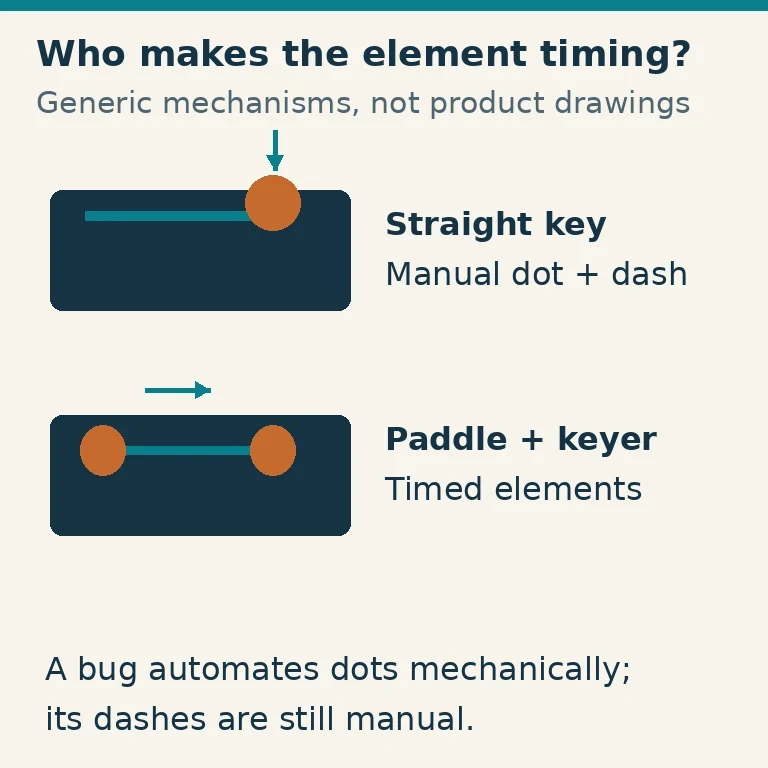
Generic straight-key and paddle mechanisms with movement arrows, distinguishing manual dot/dash duration from electronic element timing and noting the bug’s mechanical dots.
Operating Skills · 8 min

A Guide to Different CW Keys and Paddles

Choose a CW key by deciding how much timing you want to produce by hand and how much you want an electronic or mechanical mechanism to produce. A straight key leaves both dots and dashes to you. A bug produces repeated dots mechanically while you make the dashes. A paddle tells an electronic keyer which elements to generate.

Read guide →
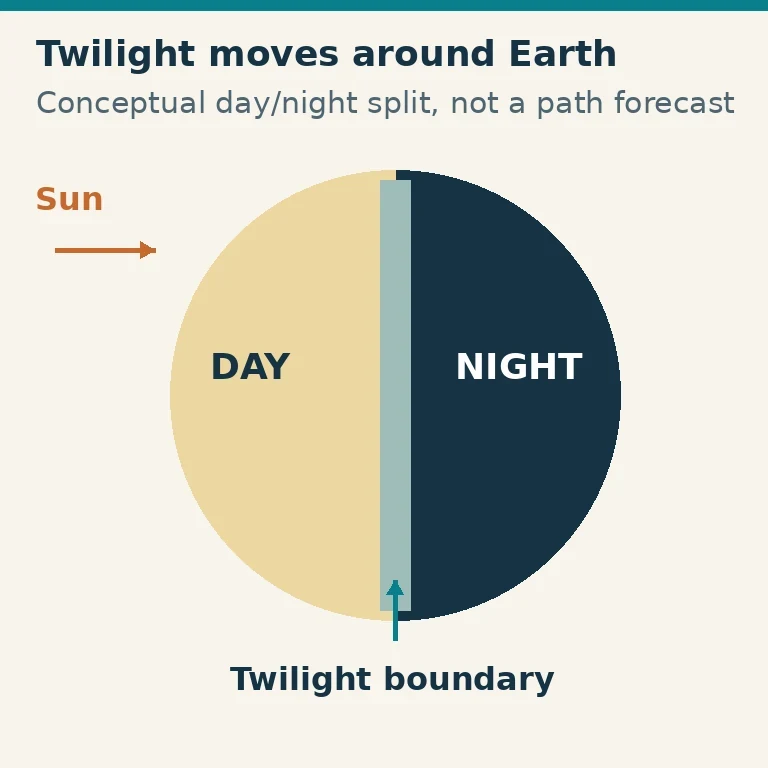
Conceptual illuminated and dark halves of Earth with a highlighted twilight boundary; no actual date, location or forecast is implied.
Activities and Propagation · 6 min

What Is the Greyline and Why Does It Carry DX?

The greyline is the moving transition between daylight and darkness around Earth. Around sunrise and sunset, changing ionospheric conditions can briefly favor long-distance amateur radio signals, particularly on lower HF bands. Operators call this greyline propagation.

Read guide →
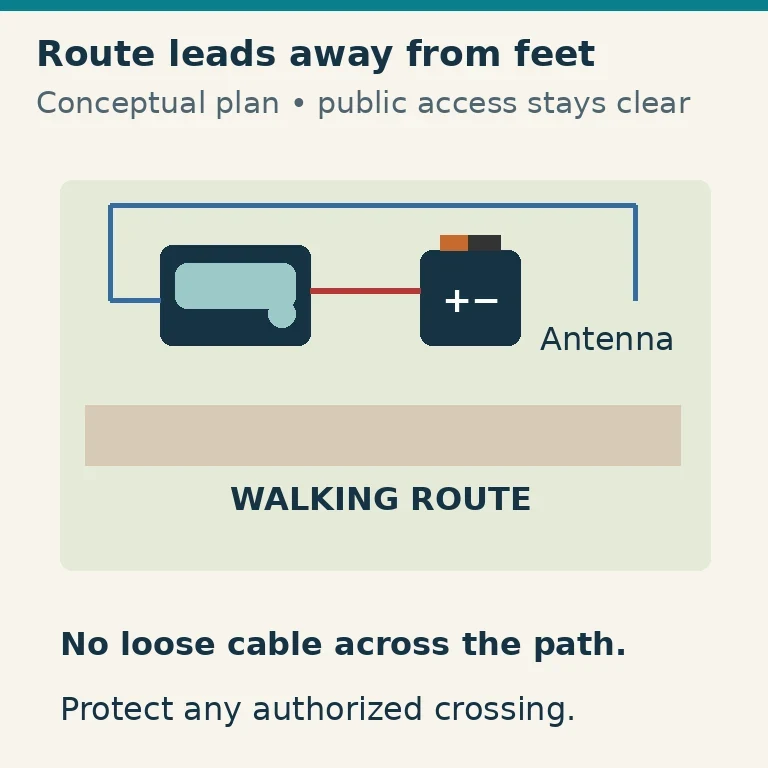
Top-down conceptual station with power and RF cables routed around an unobstructed walking route, avoiding loose cable crossings.
Getting Licensed · 8 min

How to Avoid Wire Hazards Around a Radio Station

A radio station's wires can trip a visitor, cut skin, carry battery fault current, expose dangerous voltage or fall into utility lines. Preventing these hazards starts with the route and support of each wire, not with a warning label added after installation.

Read guide →
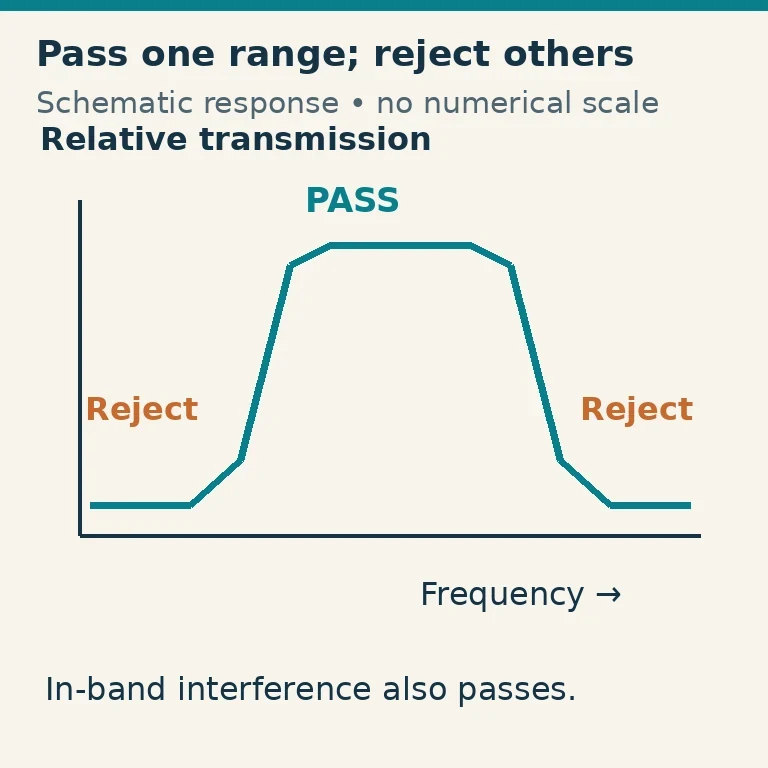
Schematic bandpass transmission response with a central passband and rejected lower and higher frequencies, explicitly without numerical scale.
Station Setup · 8 min

How to Choose a Ham Radio Bandpass Filter

Choose a bandpass filter by the unwanted signal you need to reject, the frequencies you need to pass and the power it must handle. A filter that works well ahead of a receiver may fail in a transmitting path. A high-power filter can still be the wrong choice if its passband, rejection or installation position does not address your problem.

Read guide →
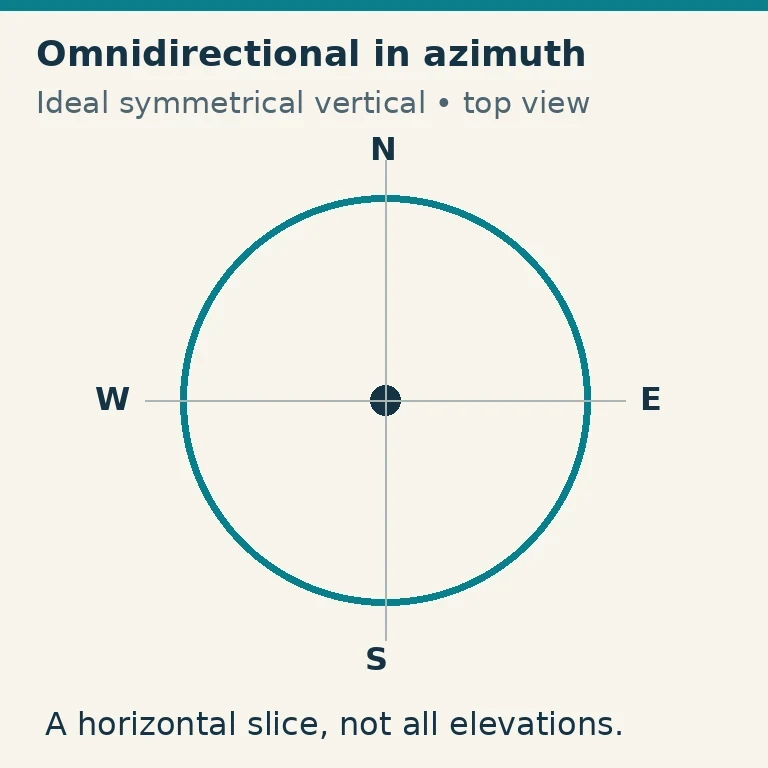
A circular ideal azimuth slice around a symmetrical vertical antenna, labeled north, east, south and west, distinct from its elevation pattern.
Antennas and Feed Lines · 7 min

How a Vertical Antenna Radiation Pattern Works

A vertical antenna's radiation pattern describes where its radiated signal is stronger or weaker in different directions. The familiar “doughnut” picture is a useful starting point: a simple vertical can cover directions around the horizon while sending relatively little energy directly overhead. It does not mean the antenna transmits equally in every direction, and it does not guarantee a particular DX range.

Read guide →
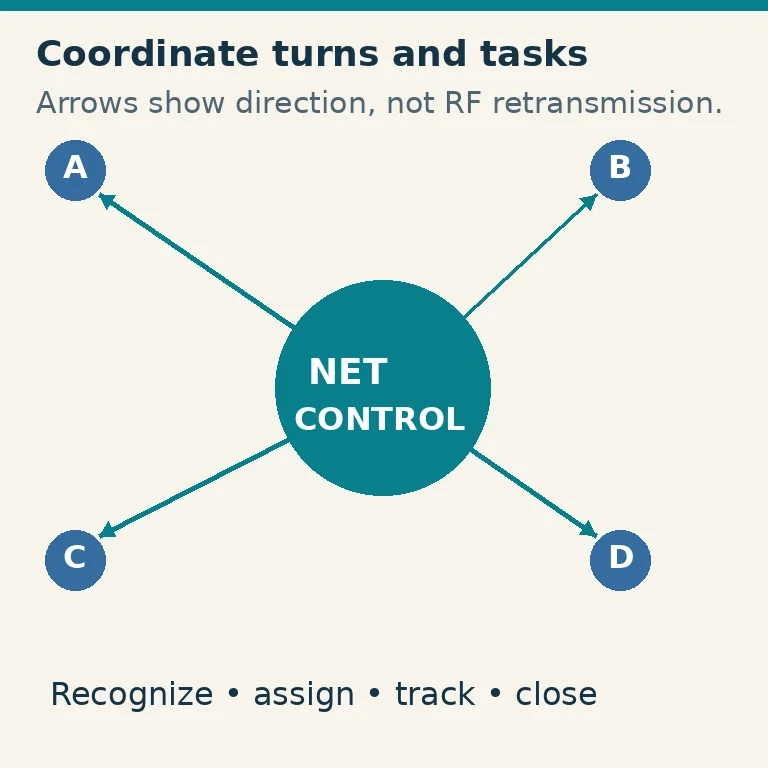
A net control station coordinates four participants; arrows represent operating instructions rather than relaying every radio signal.
Operating Skills · 8 min

How to Be an Effective Net Control Operator

An effective net control operator keeps a group of radio stations organized: who is present, who needs to speak, what information must move and when the net is finished. You do not need the loudest signal or the longest script. You need to listen, give clear instructions and maintain an accurate picture of what remains to be done.

Read guide →
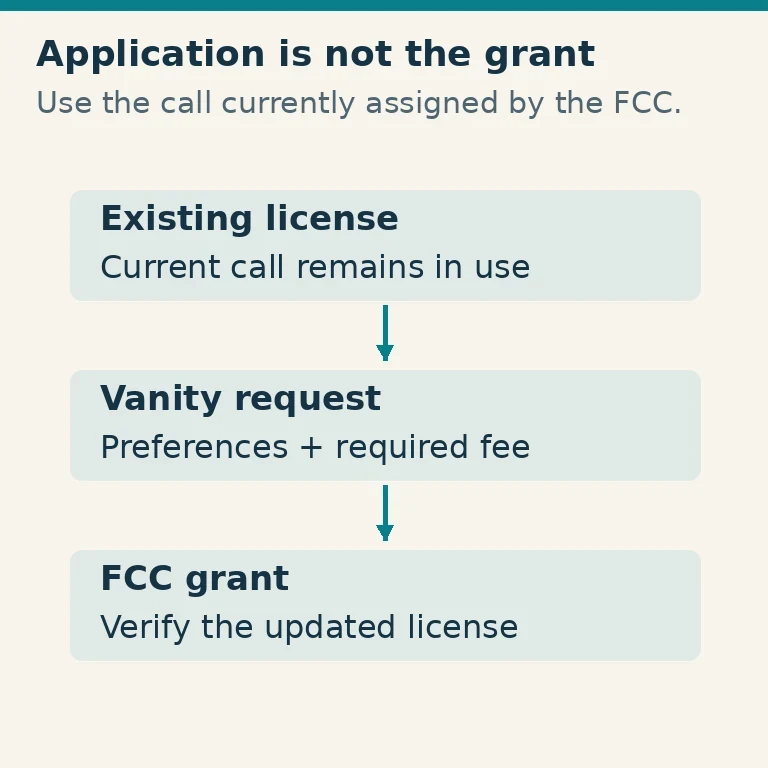
An existing license leads to a vanity request and then an FCC grant; the currently assigned call remains in use until the grant takes effect.
Getting Licensed · 8 min

How to Apply for an Amateur Radio Vanity Call Sign

A US amateur radio vanity call sign is a specific available call sign you ask the FCC to assign to your existing station license. It can be easier to say, more memorable, or meaningful to you. Applying does not reserve it, and paying the fee does not authorize you to use it. Wait until the FCC grants the change and the new call appears on your license record.

Read guide →
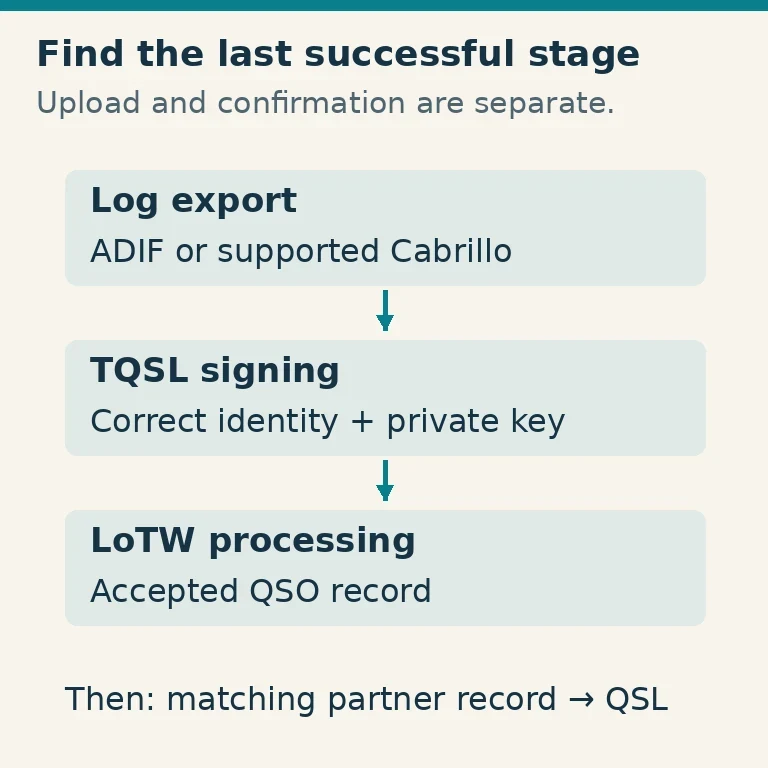
A three-stage path from log export through TQSL signing to accepted LoTW records, with matching partner data required separately for a QSL.
Operating Skills · 8 min

Why LoTW Uploads Fail and How to Troubleshoot Them

A missing LoTW confirmation does not necessarily mean an upload failed. Your logging program must first export the right contacts, TQSL must sign them with the correct station identity, the signed file must reach Logbook of The World, and the server must accept the records. A confirmation appears only when the other station submits matching information.

Read guide →
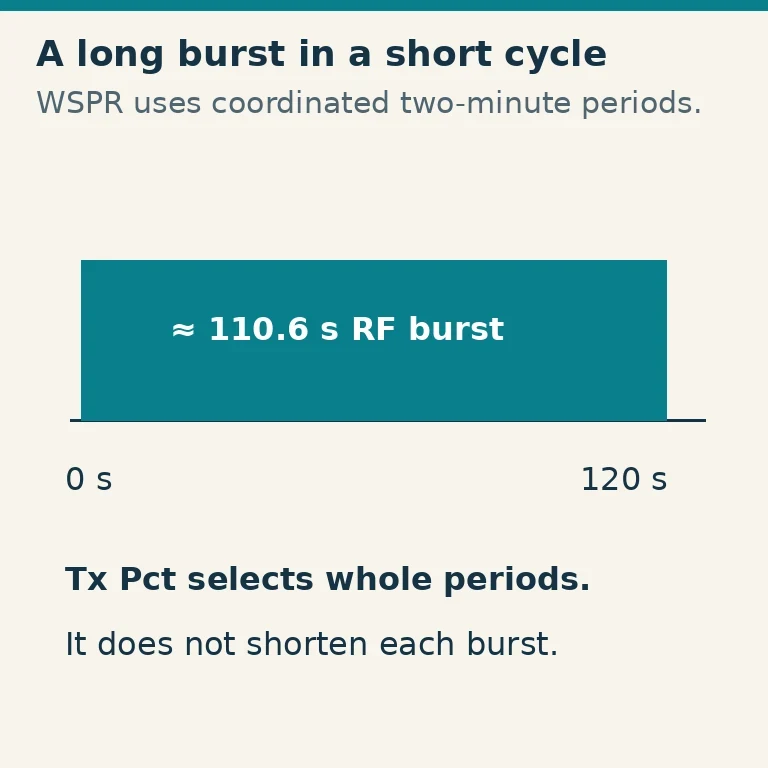
A two-minute WSPR period containing an approximately 110.6 second transmission; Tx Pct chooses periods rather than shortening each burst.
Operating Skills · 8 min

A Beginner’s Guide to WSPR

WSPR lets amateur stations report where a very weak, precisely timed radio signal can be received. It is useful for exploring propagation and checking whether a small station is getting out. You transmit a short identification message, other stations decode it, and reception reports can appear on a map. You do not exchange a normal conversation or complete a two-way contact simply by appearing there.

Read guide →
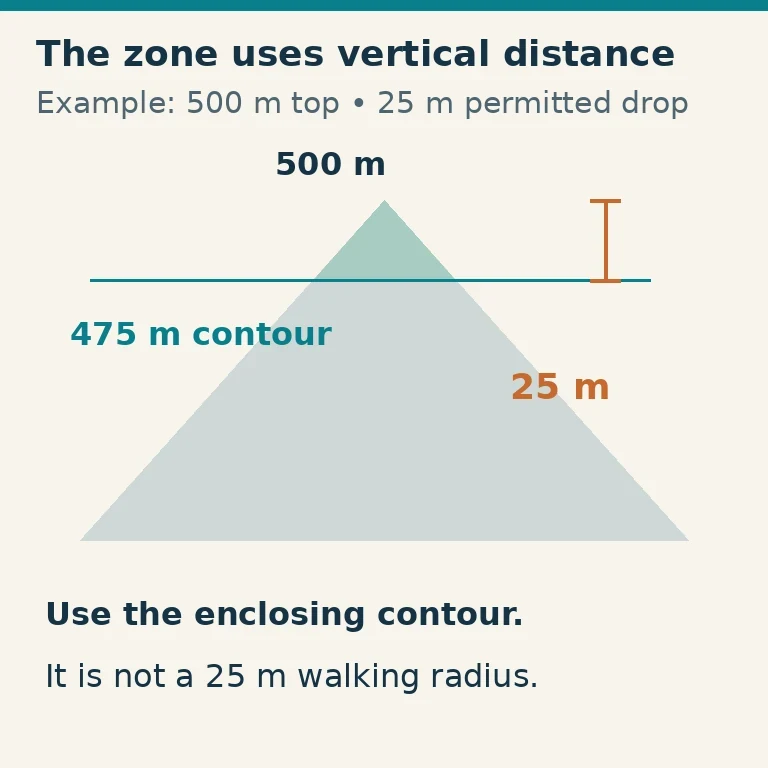
Illustrative 500 meter summit profile with the top 25 vertical meters shaded above its 475 meter contour, showing that the activation zone is defined vertically.
Activities and Propagation · 9 min

What Is SOTA? A Complete Beginner’s Guide

SOTA, or Summits on the Air, is an amateur-radio awards program built around contacts with portable stations operating from listed hill and mountain summits. An activator takes a station to an eligible summit; a chaser contacts that station from elsewhere. You can begin as a chaser from home, then plan a modest summit outing when your radio and outdoor skills are ready.

Read guide →
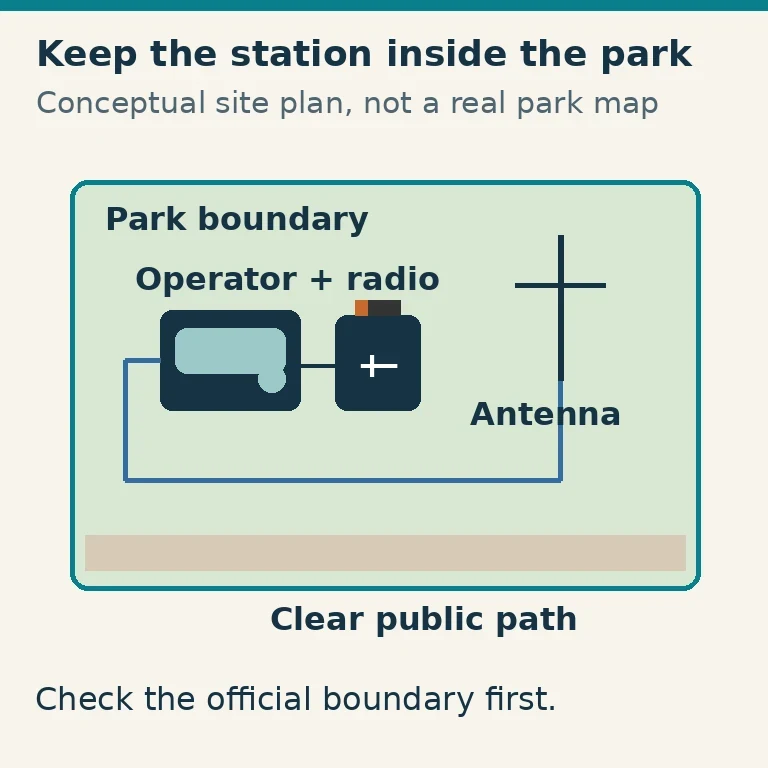
Conceptual park plan with the operator, radio, battery, antenna and leads all inside the boundary and an unobstructed public path.
Activities and Propagation · 9 min

How to Complete Your First POTA Activation Step by Step

To complete a first Parks on the Air activation, choose a listed park you can lawfully use, set up entirely within its permitted boundary, make at least ten qualifying contacts within one UTC day, and submit an accurate activator log. The radio work is only part of the outing: access, station placement, truthful records and safe pack-down are essential too.

Read guide →
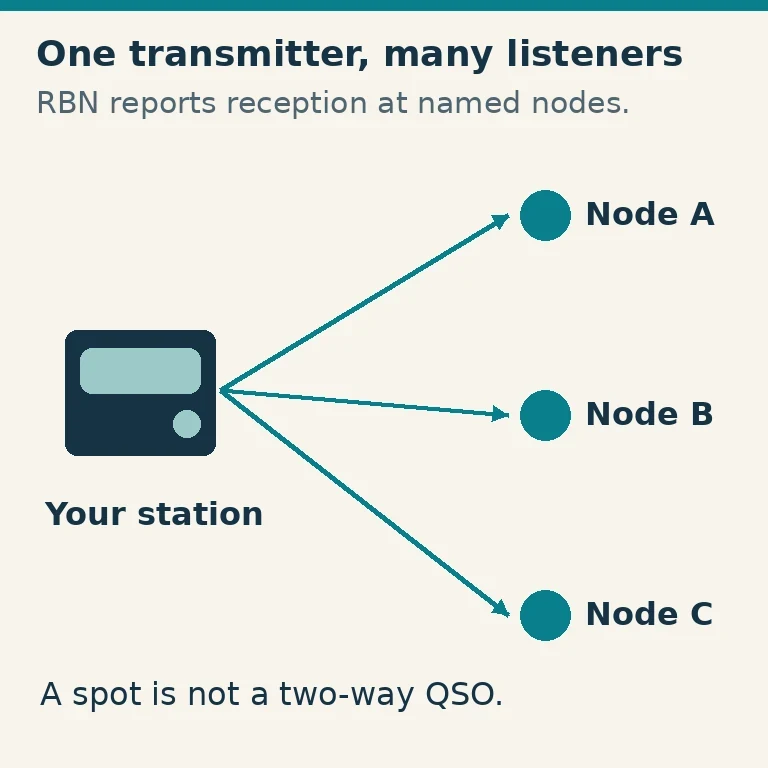
Three receiving nodes report a single transmitting station; arrows show one-way reception, not two-way contacts.
Getting Licensed · 6 min

How to Use the Reverse Beacon Network

Use the Reverse Beacon Network to find reports of signals received by its automated listening stations. Filter for a band, mode, recent time window and the spotted call sign you want to examine; then read each report as evidence that a particular receiver decoded that transmission at that time. It is a useful way to inspect propagation and your own outgoing signal, not a substitute for listening or a completed two-way contact.

Read guide →